
A Mobile Nation Requires Efficient & Effective Roadway Access
Pulling up stakes and moving anywhere in the country is a hallmark of the American lifestyle. People generally relocate for better employment prospects, a more temperate climate, or closeness to family. The communities that benefit from these shifting population trends know the importance of well-planned infrastructure for attracting those seeking greener pastures.
Near the top of the list is the need for Access Management (AM) along their roads and highways to accommodate an influx of new residents and encourage healthy growth. Roadways throughout our nation’s communities serve two primary purposes — mobility and access. While mobility deals with the efficient movement of people and goods, access allows those people and goods to reach specific destinations and properties along those roadways. A well-managed road designed to maximize mobility typically does so in part by effectively managing access to adjacent properties.
Managing existing and newly constructed corridors has long been a significant concern in many states. As sections of rural land on the outskirts of expanding communities are developed, there’s pressure to add features such as commercial driveways, at-grade public road intersections, and traffic signals to arterial highway routes that should primarily serve high-speed traffic. These added features can diminish these roadways’ speed and traffic capacity and cause significant safety issues.
This is where access management comes into play. Properly implementing access management principles balances the competing needs of traffic mobility, safe access to adjacent properties, and supports future land development along a corridor. The traffic professionals with Snyder & Associates know the critical impacts of designing roadway networks while adhering to proper access management guidelines.
Roadway Classification Affects Level of Access Management
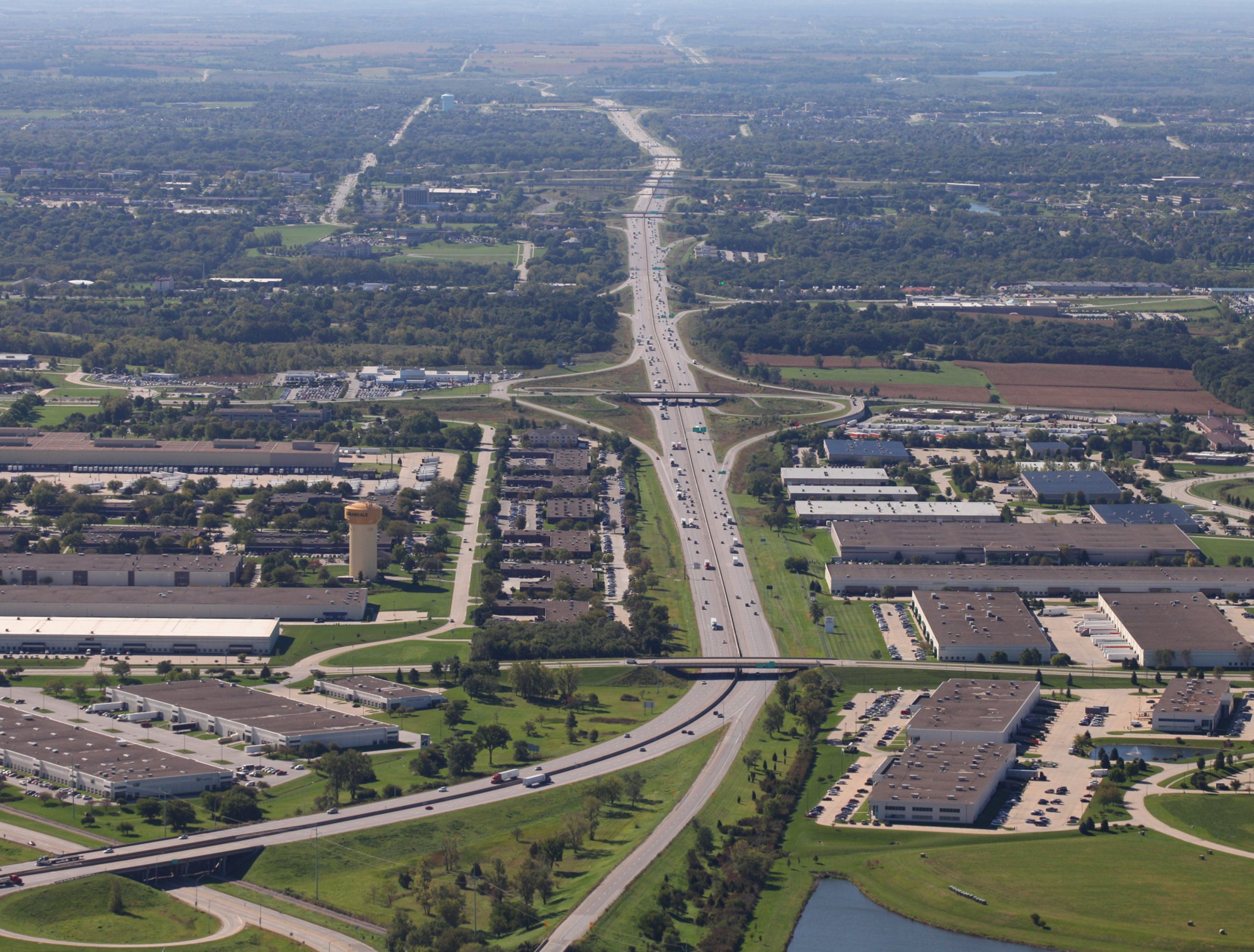
Interstates are an example of a fully controlled access facility.
An overarching principle of access management is to limit the number of conflict points along a roadway by minimizing the number of driveways and median openings. However, the level of access management needed for any particular roadway depends greatly on what type of road it is.
Most roads can be placed on an access management spectrum that helps to determine the right balance of access and mobility. In Iowa, a fully controlled access facility like a freeway or interstate sits on one end of this spectrum and is considered Priority I Highways.
Carefully spaced interchanges significantly limit access, which promotes faster and better-flowing traffic. Local residential streets are at the other end of the spectrum, where closely spaced ingresses, such as driveways, are expected. The other various road types are between these two extremes, each with its unique balance of access and mobility. It’s on these roads that a good access management policy can help improve the flow of traffic while still providing reasonable access to private property.
Problems Associated with Too Much Direct Access
The balancing act for most communities lies in allowing the proper amount of access for any particular road classification. Allowing too much direct access to land from arterial roadways can generate several problems, including delays, congestion, and reduced travel speed for commuters and travelers. Excessive direct access also leads to poor operational performance on major arterial roadways.
Additionally, air quality can suffer, and excessive energy consumption associated with increased “stop and go” traffic will increase. However, the most significant concern for drivers is the increased crash rates, injury rates, and costs associated with inadequate access management.
Access Management Strategies Promote Safe Mobility
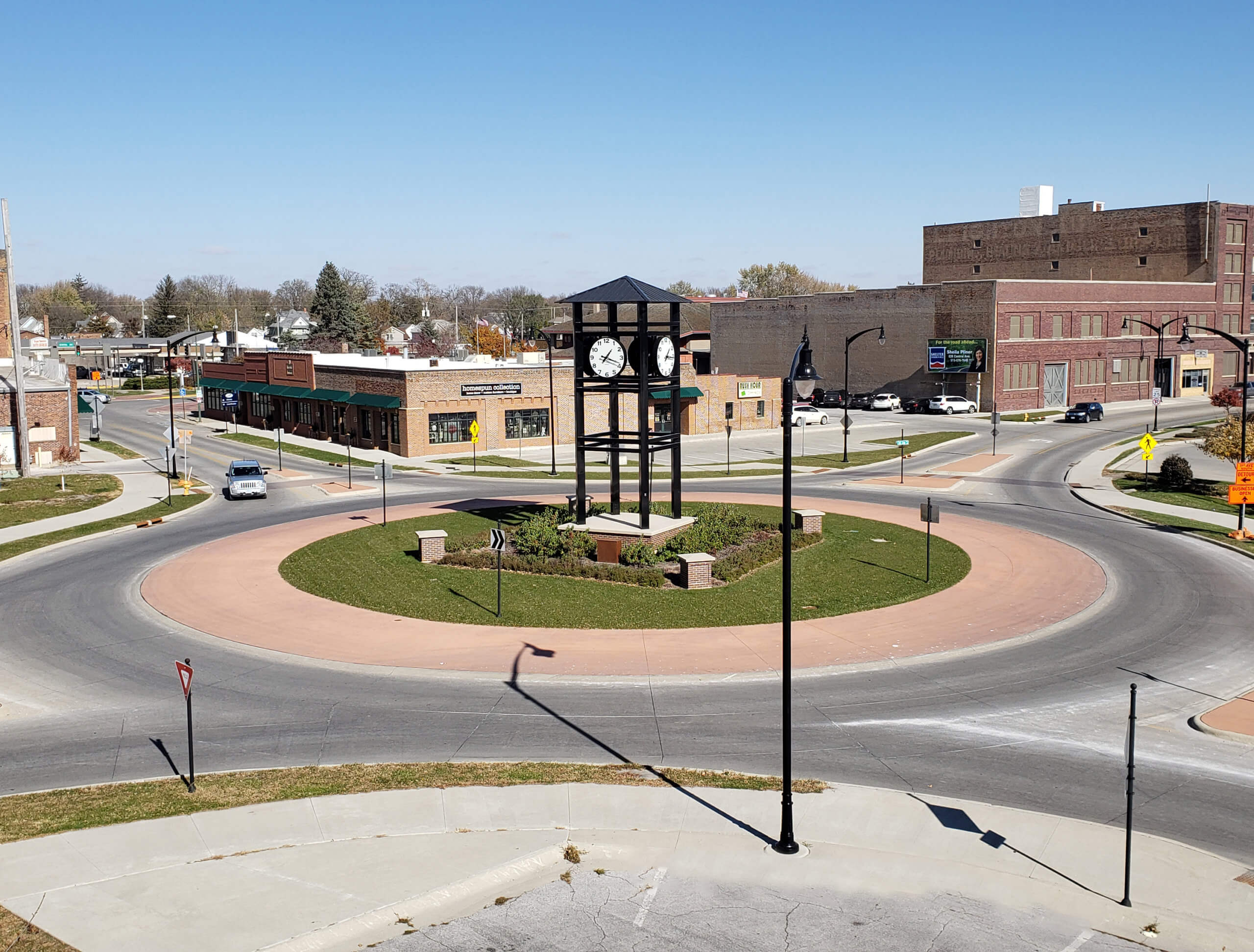
Roundabouts help reduce conflict points.
Implementing an access management strategy promotes the safe and efficient use of the transportation network. Effective access management programs typically encompass techniques state and local governments can use to control access to highways, major arterials, and other roadways. These techniques include:
- Access Spacing — Increasing the distance between traffic signals and other access points improves the safety and flow of traffic on major arterials, reduces congestion, and improves air quality for heavily traveled corridors.
- Driveway Spacing — Fewer driveways spaced further apart allow for more orderly traffic merging and present fewer challenges to drivers.
- Safe Turning Lanes — Dedicated left- and right-turns, indirect left-turns, U-turns, and roundabouts keep through traffic flowing. Roundabouts represent an opportunity to reduce an intersection with many conflict points or a severe crash history to one that operates with fewer conflict points and less severe crashes.
- Median Treatments — Two-way, left-turn lanes (TWLTL) and nontraversible, raised medians are the most effective means to regulate access and reduce crashes.
- Access Locations — Locating access and side roads directly across from one another creates better visibility for motorists, bicyclists, and pedestrians, resulting in safer conditions for each mode of blended traffic.
Expanding Communities Require Sufficient Access Management in their Transportation Networks
In areas and communities experiencing rapid land development, jurisdictions need to develop access standards that balance property access and the functional integrity of the road system. Multiple studies have shown that implementing access management provides increased roadway capacity, reduced crashes, and shortened travel times for motorists. These three benefits are essentially the result of minimizing or managing the number of conflict points along a corridor.
On the other hand, smaller communities that are expanding but at a much slower rate may not recognize the need for proper access management. This can, unfortunately, allow driveways and other access points to develop unabated, significantly impacting travel times and safety along corridors. This situation highlights that good access management can create an excellent functioning road, while poor access management can lead to traffic congestion and other issues. Areas that do not practice effective access management face more rapid deterioration of the quality of traffic flow than those with a well-thought-out access management policy.
Access management calls for adequate ingress and egress to a facility, efficient spacing and design to preserve functional integrity, and the overall operational viability of street and road systems. Snyder & Associates knows these issues well and stands ready to help communities custom-tailor their transportation network for their unique situation.