
Evolving Permit Limits for Wastewater Lagoons Protect the Environment
Ammonia is a natural by-product of the decomposition of all nitrogen-containing organic matter. This means everybody contributes to it since the human body produces ammonia. The industrial industry, such as food processing, fertilizer, and dog food plants, also contribute to ammonia levels but in higher concentrations. Ammonia also promotes algae growth in bodies of water, converting to nitrite and nitrate through aerobic biological activity, depleting dissolved oxygen in the water. At elevated concentrations, this can be lethal to aquatic life. Some algae can even be toxic to humans. An inadequately treated wastewater lagoon is often the largest contributor to the ammonia issues in our environment.
Small communities with aerated lagoon and facultative-controlled discharge lagoon wastewater treatment systems face increasingly stringent requirements for ammonia, pH, dissolved oxygen, and bacteria with the National Pollution Discharge Elimination System (NPDES) Permits. Permit limit changes have been driven by the need to protect our environment and the quality of our water supply. The Environmental Protection Agency (EPA), Department of Natural Resources (DNR), and/or other state regulatory agencies require the NPDES permit system under the Clean Water Act to regulate point sources that discharge pollutants.
As stated by Lindsay Beaman, P.E., Business Unit Leader of Snyder & Associates’ Cedar Rapids office, “meeting these requirements is essential to protect the environment and our water supply, which is the most valuable resource we have for future generations.”
Lagoon Systems Struggle to Meet New Ammonia Limits
Effectively treating ammonia in lagoons requires nitrifying bacteria and an environment where the bacteria can thrive. The success of aerated and facultative lagoons in removing ammonia is limited to moderate-temperature weather. Once the water temperature dips below 40° Fahrenheit, the bacteria needed to treat ammonia become inactive. As a result, many small communities need alternative solutions for ammonia reduction that can withstand cold winter temperatures.
The goal of new NPDES permit limits for pH is to ensure discharged water has a similar pH to the receiving stream. PH is vital as it keeps everything in balance, creating a healthy environment where aquatic life can flourish. Aquatic plants and organisms are negatively impacted if the pH becomes too acidic or basic.
Disinfection, the third component of new NPDES permit limits, is essential because bacteria, protozoa, and viruses present in water can lead to disease and illness. Even just a single exposure can have hazardous health effects. “Bodily contact with polluted water can harm human health,” explains Beaman. “Children and other stream users may inadvertently ingest water from receiving streams or come in contact through a wound, cut, or scrape, so disinfection is crucial.”
Evaluation of Technologies Used to Reduce Ammonia
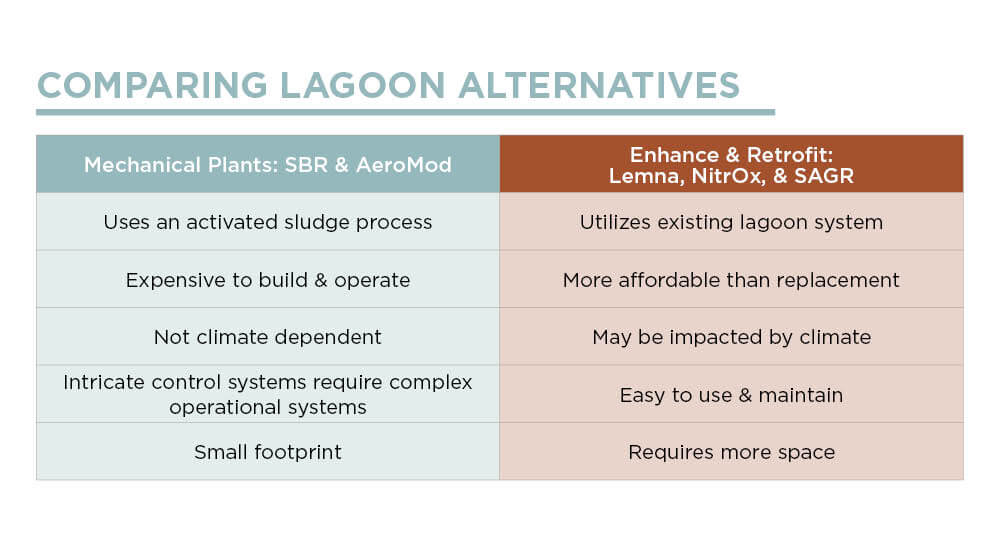
The solution for small livable communities seeking alternative methods of ammonia reduction is either lagoon enhancement or replacement. Several mechanical plant options exist for lagoon replacement, while Lemna systems, NitrOx® Reactor systems, and Submerged Attached Growth Reactor (SAGR) systems are common ways to enhance an existing lagoon.
Lagoon Replacement Options
Aero-Mod and Sequencing Batch Reactors (SBR) are two examples of mechanical plant options for lagoon replacement. Both systems utilize the activated biosolids process to treat wastewater. The City of Atkins Wastewater Treatment Plant is an example of an Aero-Mod system used to achieve NPDES permit effluent limits while expanding plant capacity to accommodate the increased influent flow.
Lagoon Enhancement or Retrofit Options
Lemna Environmental Technologies
A LEMNA system utilizes modular, insulated covers to help retain heat. They also keep sunlight out, hindering algae growth, which can cause problems with suspended solids in the effluent. Nitrifying and denitrifying reactors are plug-in components added to the back of the lagoon to finish the process the lagoon starts. Overall, LEMNA systems are relatively easy to install, with few moving parts and minimal human intervention needed for operation. Our team recently designed a LEMNA treatment system for the City of Earling, Iowa, whose facility was at maximum capacity. Their lagoon system is landlocked with an unwilling seller, making expansion a difficult solution. The LEMNA system allowed the city to maintain its current footprint while greatly increasing treatment capacity.

Construction is taking place for wastewater treatment plant improvements in the City of Norway.
NitrOx Reactor
A NitrOx® Reactor is a compact, easy-to-install system that enhances lagoons by heating the water to maintain the temperature needed to keep bacteria active. Situated next to a lagoon, these low-cost systems are relatively easy to maintain and operate. However, utility costs will likely increase because the system helps regulate water temperature. Norway’s Wastewater Treatment Plant improvement project utilizes a NitrOx® Reactor. This was determined to be the best course of action because it can manage the ammonia removal process while still utilizing the existing aerated lagoon treatment system.
Submerged Attached Growth Reactor (SAGR)
Typically built as an addition to an existing lagoon, SAGR systems are an effective solution for meeting stringent EPA water quality standards in cold to moderate climates. They’re also fairly easy to operate and maintain. Constructed below grade, SAGR systems use natural, geothermal heat and the Earth’s natural insulating properties to maintain water temperature during average winter conditions. Wastewater treatment plant improvements developed by our team for the City of Colesburg and the City of Lenox utilize SAGR systems.
Supplemental Disinfection Options for Lagoon & Mechanical Wastewater Treatment
Regardless of your chosen solution, supplemental disinfection will also be necessary to meet NPDES requirements.
Natural Disinfection
Natural disinfection allows wastewater to sit exposed to the elements for approximately 180 days as bacteria die off. It’s affordable and easy to use without the need for chemicals, maintenance, and utilities. However, natural disinfection can’t be guaranteed, requiring more space than other options.
Chlorination-Dechlorination
This method of disinfection utilizes chemicals to disinfect wastewater. While effective, it requires space, labor, chemical use, and storage, which are factors communities should take into account. Another downside is the pass-through of chemicals into the receiving stream.
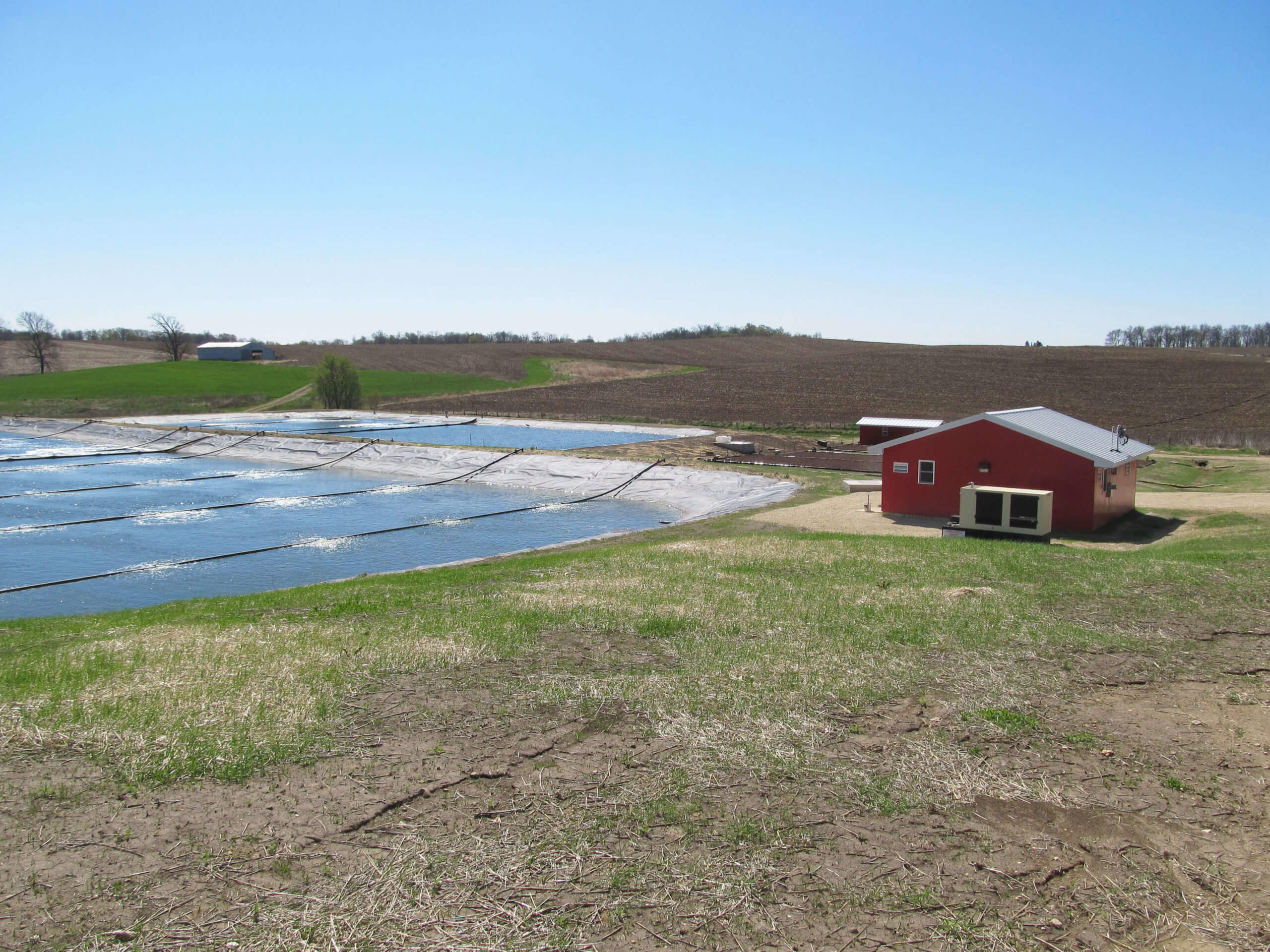
The City of Colesburg uses a SAGR system and UV disinfection to achieve NPDES compliance.
Ultraviolet (UV)
UV disinfection utilizes light to neutralize harmful microorganisms. UV systems come in many shapes and sizes, allowing them to be tailored to specific community needs. However, low light transmittance impairs the effectiveness of UV disinfection, so it’s not ideal for all lagoon systems.
Determining the Appropriate Ammonia Treatment Option
The optimal wastewater treatment solution for any community involves several factors, including current system conditions, available space, and budget. It’s also essential to take operator licensing into account. Whether you want to upgrade or replace your wastewater treatment facility, you’ll need a licensed staff to operate it. Higher certification for operators may be required depending on how sophisticated your system will be. Many communities needing lagoon enhancement or replacement are experiencing population decline, with much of the remaining population on fixed incomes. The residents bear the burden of expensive wastewater treatment system initiatives, often in situations where city rates haven’t increased for many years. Our team has significant experience assisting communities with grant and loan applications and appealing to the DNR for time extensions while affordable alternatives are explored. Once the appropriate solution is determined, project planning, permitting, and construction typically occur over a five-year period.
“We encourage any community facing the challenges associated with lagoon wastewater treatment facilities and stringent NPDES treatment requirements to proactively access their options,” shares Beaman. “There’s no such thing as a one-size-fits-all solution. Ensuring your community is positioned to meet wastewater treatment requirements demands careful thought, planning, and implementation.”