Environmental Stewardship through Mitigation Banking
As we face growing concerns over the environment and climate change, protecting the world around us is more important than ever before. For over 40 years, Section 404 of the Clean Water Act has aimed to regulate the discharge of pollutants into rivers, lakes, streams, and wetlands, which are a vital source of drinking water and an integral component of the environment. “Section 404 aims to minimize impacts to waters of the U.S,” shares Nichoel Church, PWS, Environmental Scientist for Snyder & Associates.
The U.S. Army Corps of Engineers (USACE) is responsible for enforcing section 404 of the Clean Water Act, which requires a permit for any project that discharges fill or dredges material into the Waters of the United States (WOTUS). Generally speaking, Church says permit applicants must demonstrate that discharge won’t significantly degrade the water it’s discharged into and review alternative options. If impacts are imminent and expected to exceed permit thresholds, compensatory mitigation is required. Through mitigation, the applicant offsets the environmental impact by purchasing mitigation bank credit, in-lieu fee credit, or replacing what was lost through permittee-responsible mitigation.

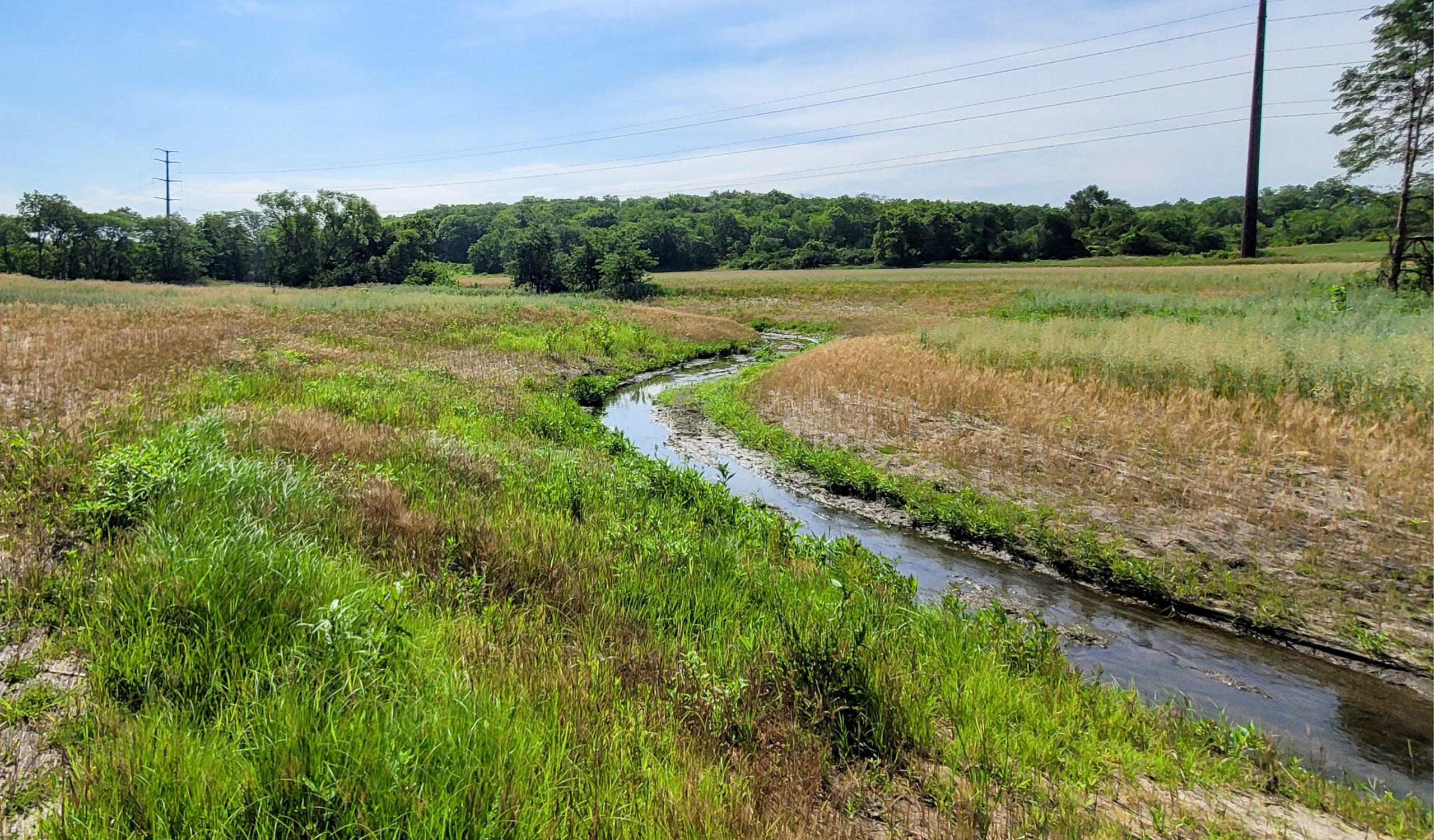
Pabst Wetland & Stream Mitigation Bank during construction.
Mitigation might sound intimidating for landowners, developers, municipalities, and others, but it doesn’t have to be. As Church points out, there’s a permitting process in place, and mitigation bank credits are available in many states to streamline mitigation requirements. “For example, in Iowa, mitigation banks are designed specifically for the purpose of offsetting unavoidable impacts to emergent wetlands, forested wetlands, and streams,” she explains. “They provide the opportunity to quickly and efficiently mitigate permitted impacts and comply with the Clean Water Act, so there’s no net loss to the environment.”
Understanding Basics of Mitigation Banking
A mitigation bank uses a credit and debit system to offset impacts to WOTUS in a specific service area. Credits are improvements that are available for purchase. Debits result from permitted impacts to WOTUS. Mitigation banks are found in two forms or a combination of both:
- Wetland Mitigation Bank — A property containing at least 25 acres of improved or created wetland. Improvements include enhancing vegetation and restoring hydrology.
- Stream Mitigation Bank — A segment of a stream that’s been improved to benefit the watershed. Improvements include reshaping slopes for stabilization, adding in-stream structures such as bendway weirs, or removing dams and other obstructions.
The amount of credit available for purchase is determined by the level of functional lift an improvement will provide. The method used to determine credits varies by state. In Iowa, the Iowa Mitigation Banking guidance and Iowa Stream Mitigation Method (ISMM) determine credits. In terms of size, the general rule of thumb is to use 25 acres or more for a wetland mitigation bank and 2,500 linear feet of stream for a stream mitigation bank.
The Development of a Mitigation Bank
The individual or entity who owns the mitigation bank is known as the Sponsor. The Sponsor goes through an approval process with an Interagency Review Team (IRT) that includes the U.S. Army Corps of Engineers (USACE), U.S. Environmental Protection Agency (EPA), Department of Natural Resources (DNR), U.S. Fish and Wildlife Service, and other agencies to provide mitigation credits for purchase.
Through the IRT approval process, proposed improvements for a mitigation bank are extensively reviewed, and credit amounts are determined according to the level of anticipated environmental lift. Once the approval process is complete, initial credits are released and available for purchase. After construction is finished, more credits are released according to a credit release schedule. Any remaining credits are released after each successful year of monitoring and the IRT’s review of the monitoring report.
Bunker Stream Mitigation Bank during the final walk-through with the contractor.
Mitigation bank success is rewarded with credit releases. Failures result in adaptive management, withheld credits, and the IRT could ultimately terminate the mitigation bank. The approval and monitoring process requires planning, documentation, and foresight, so professional guidance is often helpful.
“We can help a Sponsor navigate the approval process with the review team to keep things moving forward,” says Church. “Through our work with six successful mitigation banks along with numerous others currently pending in Iowa and Nebraska, we’ve developed a deep understanding of the mitigation bank process, standards, and requirements.”
The Cost of a Mitigation Bank
Wetland mitigation bank credits are generally sold on a per-acre basis. In Iowa, an emergent wetland credit can range from $35,000- $75,000, while a forested wetland credit may cost between $45,000- $105,000. Currently, stream mitigation credits sell for $35- $114 per credit in Iowa. However, credit cost varies by state, impact activity, wetland function, and credit type. In addition, different states use different methods of determining the level of mitigation required for environmental loss. For example, in Iowa, stream credits are determined using the Iowa Stream Mitigation Method calculator. Missouri and several other states have their own method of determining mitigation for stream loss. Minnesota and Oregon utilize wetland function and value assessments, which can require additional mitigation.
Steps Towards Purchasing Credits
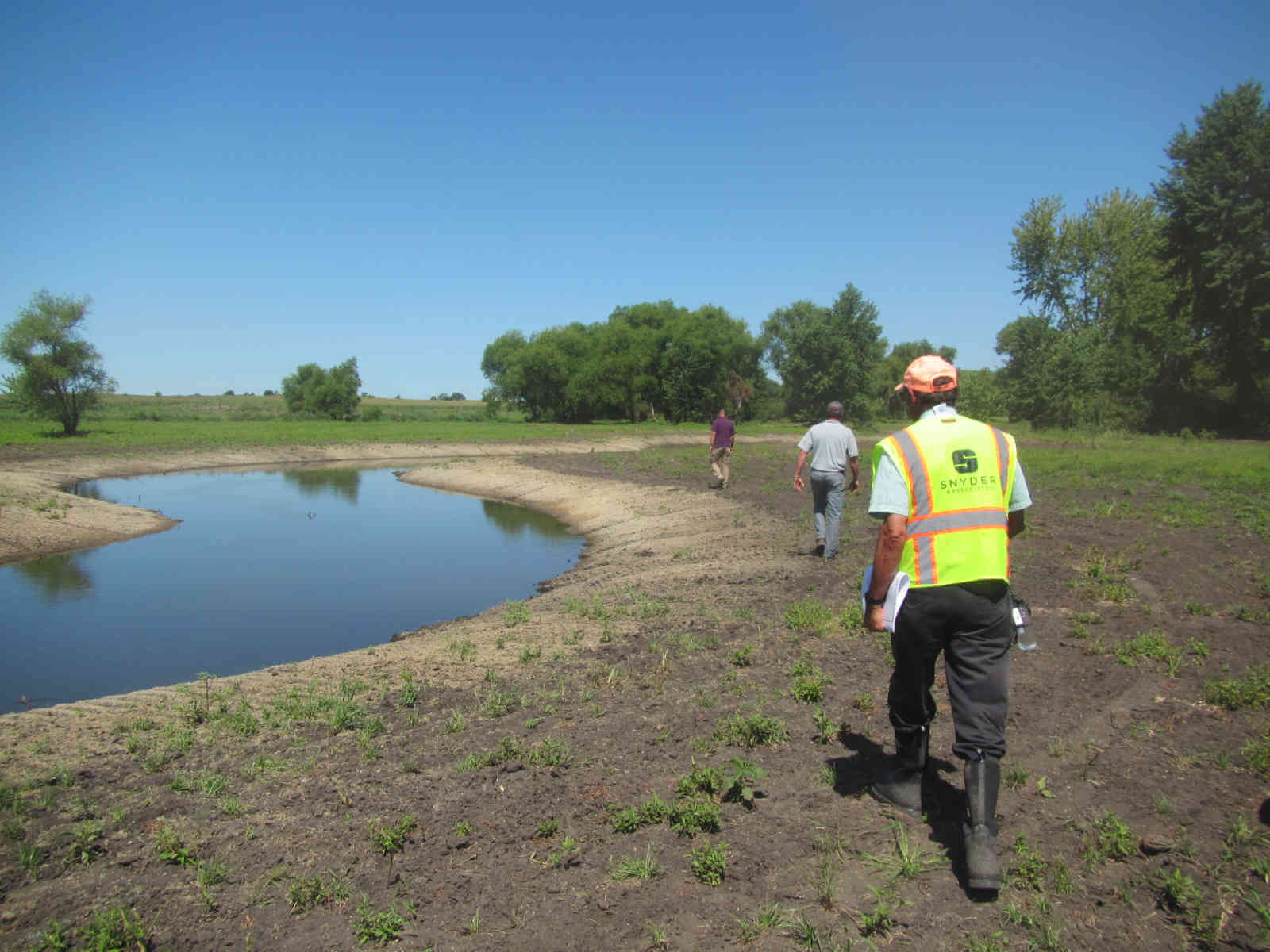
Snyder & Associates experts conducting a site walk at Niebuhr Stream Mitigation Bank.
If a jurisdictional stream or wetland will be permanently filled or altered, a Section 404 permit is required under the Clean Water Act. Snyder & Associates is often the authorized agent, which allows us to obtain Section 404 permits on behalf of our clients. Our client is called the permittee. The permittee is ultimately responsible for ensuring permit compliance. Sponsor contact information and credit availability are located on a website called RIBITS, which stands for the Regulatory In-Lieu Fee and Banking Tracking System. This website is owned and managed by the USACE.
The permittee or authorized agent discusses mitigation requirements with the USACE during the permitting process. The permittee is responsible for completing mitigation. If the purchase of mitigation bank credits is required, a mitigation bank application is filled out and payment is sent with the application. The mitigation bank Sponsor receives the application, processes payment, debits the credits from their ledger, and sends the permittee a proof of purchase. The permittee forwards the proof of purchase to the USACE, and the USACE deducts the purchased credits in RIBITS to complete mitigation.
Permittee-Responsible Mitigation
Permittee-responsible mitigation allows a project owner to construct or enhance a wetland or improve a stream and monitor its success. This option is only available for projects that are outside of a mitigation bank service area. It requires applicants to submit a mitigation plan. Then, permitting agencies and the applicant(s) come to an agreement on the location, construction requirements, and monitoring. Monitoring may be required for up to 10 years. Annual reports are submitted to the permitting agencies to prove the success of the mitigation site. If a mitigation site fails or is unsuccessful, it must be replaced or mitigated by purchasing bank credits.
Benefits Mitigation Banking
- Environmental Stewardship — Agency approval and ongoing monitoring ensure mitigation bank success of improvements and environmental lift techniques.
- Mitigation Efficiency — Purchasing mitigation bank credits is a fast, effective way to meet 404 permitting requirements while avoiding the need for costly maintenance and monitoring of permittee-responsible mitigation.
- Maximize Land Use — Permittee-responsible mitigation can slow development and change intended plans for land use. Mitigation banks provide an opportunity to maximize land use while offsetting the impact in a nearby location.
Navigating the Path to Mitigation Banking Success
There’s no way to be sure what mitigation needs your project may require without thorough review and analysis as well as early coordination with permitting agencies. Whether you’re looking to realign a straightened stream or develop a piece of property near a wetland, professional expertise will help sort out the details. An onsite review such as a wetland delineation or stream assessment will identify the presence of U.S. waters in your project area. Using the information that results, you can prepare and plan for mitigation to keep your project moving forward and within budget. “Every project is different, and mitigation requirements vary by state,” says Church. “We can help you gain an understanding of the level of mitigation your project will need and explore the credit opportunities available to you.”