The Changing Human-Made Landscape & Physical Environment
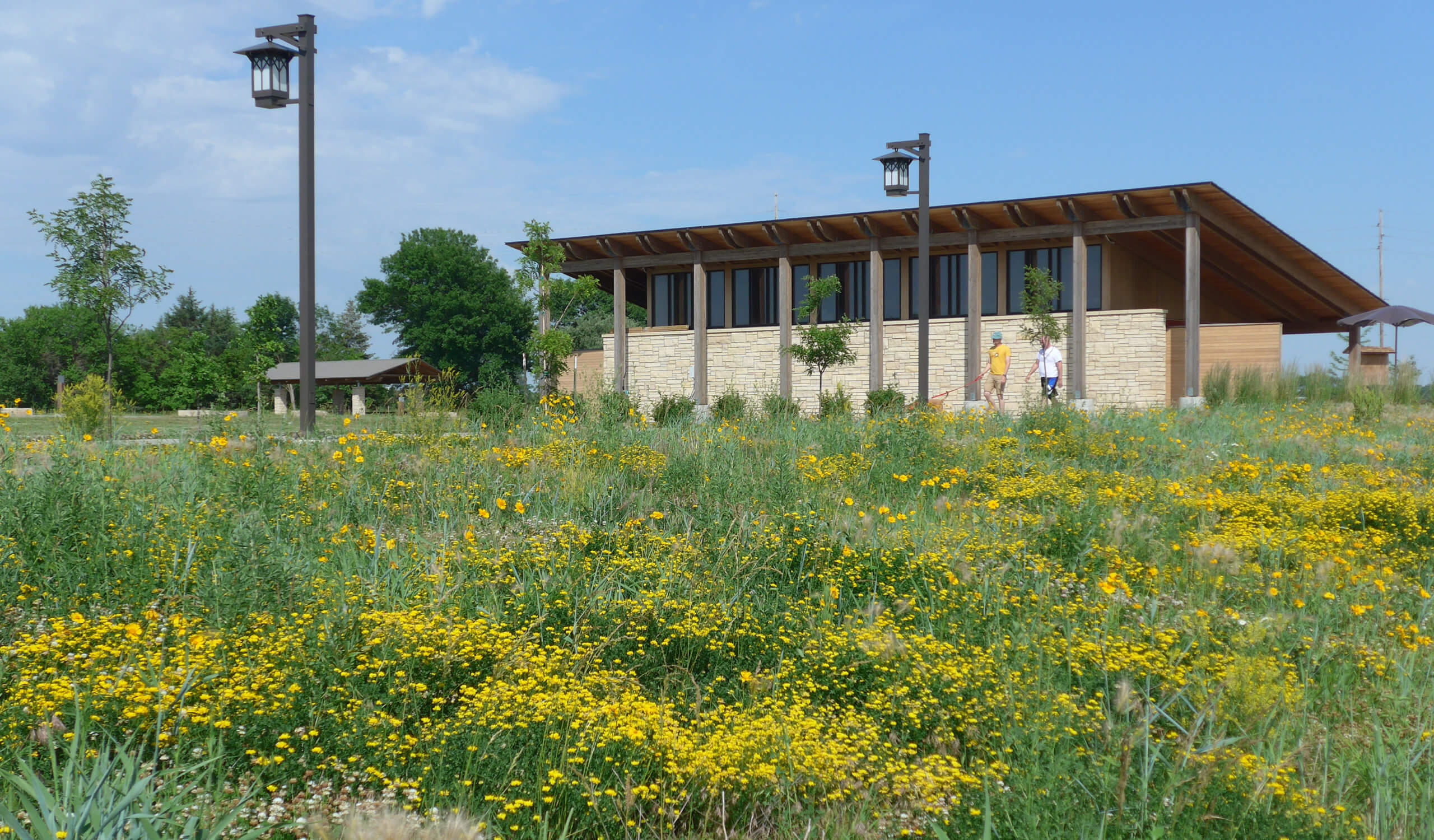
The paths and native plantings surrounding Terry Trueblood Park create an inviting space to enjoy nature.
For thousands of years before agriculture and urban development, the Midwest landscape was primarily comprised of prairie vegetation. Due to large, robust root systems, native plants cultivated rich soil with high organic content and created space within the ground that guided rainwater infiltration. The landscape acted similar to a sponge, easily able to absorb stormwater with little runoff into rivers, lakes, and streams.
In stark contrast, today’s turf and concrete landscapes are impervious and compacted. Runoff is common with rainfall and snowmelt, contributing to poor water quality, erosion, and elevated flood risks. For years, native plants and naturescaping only existed along waterways or in wetlands, prairies, and nature preserves. However, as more people discover the significant benefits they provide over traditional landscaping, native plant landscaping design has become common everywhere from parks to residential developments and large, institutional campuses.
Benefits of Landscaping with Native Plantings
In a world where natural habitats struggle to survive, the return of native plants to everyday landscapes is an aesthetically pleasing change with unique benefits:
- Biodiversity — Native plants promote wildlife habitats, serving as a crucial source of food and shelter for birds, butterflies, and other wildlife.
- Low Maintenance — Selecting plants that thrive naturally with the climate and soil conditions of a project location allows naturescaping to flourish without the use of fertilizers or pesticides. Native landscapes also rarely need to be watered or cut once established.
- Money Savings — The initial cost of installing a native plant landscape is comparable to traditional lawn and shrub landscapes. However, significantly less maintenance time and cost are involved long-term. The naturescape essentially takes care of itself and is designed to do so.
- Water Quality — Dense, deep root systems of native plants hold soil to prevent erosion and allow for better absorption of rainfall, which reduces urban runoff that’s harmful to water quality. Traditional landscaping typically utilizes synthetic pesticides and fertilizers. During rain events, these chemicals often run off into public water supplies causing contamination.
- Enhanced Livability — Colorful, diverse plant material is aesthetically appealing. It also attracts wildlife and pollinators. An ecologically functional native plant landscape provides creativity in contrast to sterile, static landscapes.
Steps to Design Native Plant Landscapes
Drawing upon the knowledge and experience of the Snyder & Associates landscape architects and environmental scientists, we’re able to guide the success of native landscapes for our clients. As with any landscaping decision, there are many factors to consider during the planning process, which are well-known and practiced by our landscape design professionals.
Create a Landscape Concept Plan
All projects are tailored to meet the needs of our clients and their individual landscape goals. Through the selection of appropriate native plants, each landscape is designed to suit the conditions of the project site.
Evaluate Existing Conditions & Site Preparation
Site preparation is significantly dependent on existing site conditions and varies widely from removing invasive plant species to amending and restoring damaged or compacted soil. Planting and seed specifications are selected based on many factors including soil, sun exposure, and climate conditions.
Prepare a Planting Plan & Plant Schedule
Native plantings are typically started in the spring when temperatures are mild and soil moisture is high to allow for the greatest chance of survival. However, planting can occur at any time during the growing season, but a watering schedule may be required. Dormant seeding in late fall is also an option, when necessary. No matter what time of year planting will occur, planting plans are created in phases with varying levels of complexity to guide optimal plant establishment.
Develop a Landscaping Maintenance Plan
Mowing, weeding, and burning are aspects of initial maintenance to control invasive species that are often overlooked. We can assist with the development of maintenance plans to foster the health and establishment of your naturescape.
Monitor & Assess Landscape Progress
It may take anywhere from two to five years for a native landscape to become well-established. As the naturescape matures, additions to the site or changes to maintenance may be necessary. We can provide long-term monitoring and recommendations as the landscape progresses.
Quick Tips for Sustainable Native Plant Landscape

Volunteers plant native seedlings in one of the newly created bioswales in Shadle Park.
Keep the following aspects in mind to guide the growth and sustainability of your native plant landscape:
Landscape Installation & Establishment Best Practices
- Plant in spring or fall
- Tailor seed mixes to individual site conditions
- Maintenance is critical for the first three years
- Mow multiple times per year from May through September
- Regularly remove invasive plants
Long-term Landscaping Maintenance Plans
- Mow to a height of four to eight inches once a year and remove clippings
- Controlled burning is useful for larger areas instead of mowing to remove undesirable species and increase sun exposure to promote new seed growth
- Remove invasive and unwanted species a few times per year
The landscape architects at Snyder & Associates have completed a wide variety of successful native landscape projects over the past 15 years. From one-tenth of an acre to 200-acres and beyond, when it comes to native landscapes, we value the low-maintenance beauty and environmental benefits that naturescaping provides.