Trails are for More than just Biking
“I hate bike trails,” my friend announced at a trail ribbon-cutting ceremony. The statement was quite loud and unexpected from someone that’s a trail advocate and an avid cyclist, or what we affectionately call a “bike zealot” in the cycling community. He said it for shock value, of course, but it wasn’t immediately apparent why.
After his initial exclamation he went on to explain why he dislikes “bike trails,” but adores “multi-use trails.” It turns out, he’s not against trails, but rather the use of the word “bike” to define their purpose, and I can understand why.
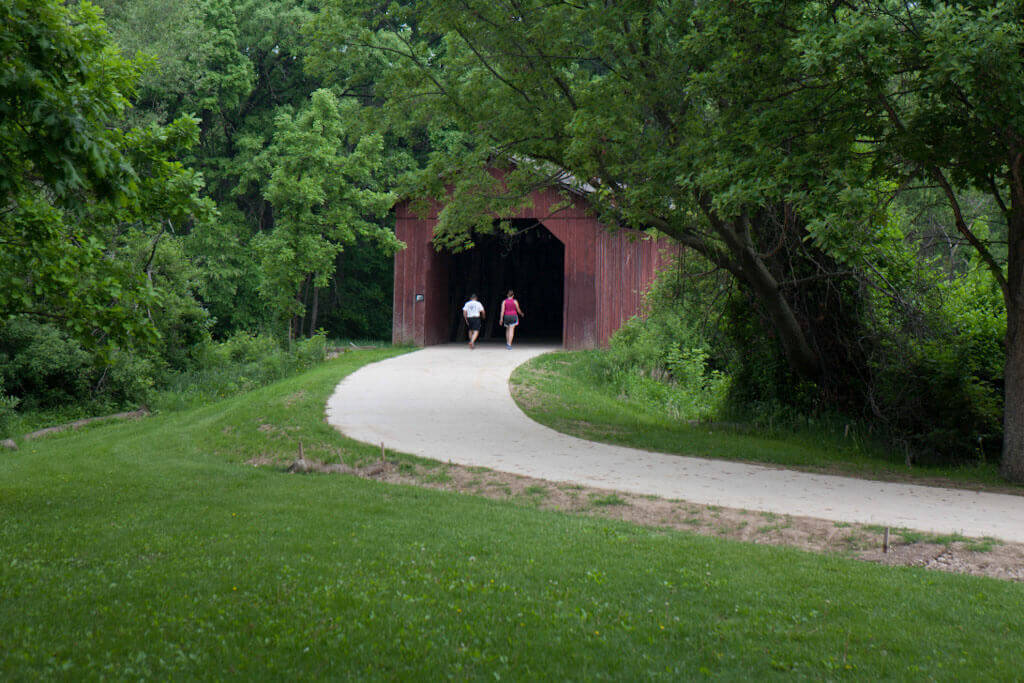
Trails are more than just a piece of infrastructure. They’re a place with meaning that serves as a backdrop to fundamental life experiences. I chose my house because it’s near a trail, and I vacation to places where I can explore new trails and their surroundings. My son and I use trails to get around town, visit parks, and go out for ice cream. He learned how to ride his bike on a trail and began exploring our local trail system on his own.
Trails prompt us to interact with others, connect with nature, and grow both mentally and physically. Personally speaking, while using trails I’ve:
- Strengthened bonds with friends new and old
- Enjoyed the beauty of a sunrise, sunset, full moon, and the starry night sky
- Lost 40 pounds (and gained back 10) through a healthy, active lifestyle
- Volunteered with colleagues and community members to clean up the environment
- Picked wildflowers and watched twin fawns grow
As a bike and pedestrian planner, I know my appreciation for trails is shared by thousands of others that have their own unique experiences every day. While it may look like someone is just biking, walking, or running on a trail, there’s so much more going on. And when you look at it that way, the term “multi-use trail” feels much more appropriate.
Trail Terminology Shapes Our Perception of Value
 Now you’re probably thinking, bike trail, multi-use trail—why does it matter what we call it? In public meetings, I’ve heard dozens of objections and criticisms that arise when people think they’re just for bicyclists.
Some people feel that tax dollars shouldn’t be spent on trails because cyclists are a small portion of the population. Others want to see their community’s roadways in better condition before trails are built. There are also concerns about criminal activity and an invasion of neighborhood privacy, among others. This line of thinking can impede equitable mobility in communities and poses a major disadvantage to biking as a means of environmentally-friendly, active transportation.
When this happens, we as planners respond by acknowledging these concerns and offering ways to mitigate them, if possible. Potential solutions could include building privacy fences or planting landscape buffers between trails and residential homes. We clarify that many funding sources are available specifically for trails and alternative transportation, so they’re not in competition with funding for roads or other local needs. We also draw attention to the wide variety of audiences that use trails and the benefits they provide such as improved public health and fitness, economic development, and higher property values.

During trail planning and design, we take all of this into account to create trails that enhance the overall quality of life within our client communities. Reflecting on my experience as both a trail planner and user, I think it’s important to speak about trails in the context of being for everyone—all ages, all abilities, and for multiple purposes.
Trails aren’t just for biking, and implying that they are may be detrimental to their implementation because terminology can limit our perception of value. When we appreciate the broader use of trails and the overwhelming benefits they provide, we can often look beyond initial objections.
It may seem that a rose by any other name would smell as sweet, but in this case, if a multi-use trail is a rose—a bike trail is a noxious weed. I’ll also accept recreational trail, shared use path, paved trail, and just plain ol’ “trail.” If you have a comment or story to share about trails, feel free to contact me.