Uneven Stormwater Rules Lead to Muted Progress
The Earth is naturally designed to accept rainfall as part of the water cycle. Areas of grasses, forests, and wetlands insatiably absorb the water to feed vegetation, recharge groundwater, and fill rivers and lakes. However, the instant water hits pavement and other man-made surfaces, it begins creating runoff. As gravity naturally carries this runoff downhill, it picks up fertilizers, oils, and other pollutants along the way. With more land being developed all the time, we see a change in the natural patterns and rates of runoff Mother Nature has created, leaving a significant need to properly convey and infiltrate our stormwater safely. As with many things, there are rules and ordinances for how this conveyance and infiltration can be accomplished in a safe and environmentally friendly manner. Unfortunately, approaches to the management of these issues are currently disconnected and vary at the state and local levels, ranging from attempts to reduce local stormwater management authority to preventing urban development altogether.
Water Knows No Community Boundaries
In the upper Midwest, Wisconsin, and Minnesota are leading the way in stormwater management due to their vast number of rivers, lakes, waterways, and wetlands. Snyder & Associates’ Madison office has followed this trend and continues its efforts to improve stormwater management in communities. While various regions across these two states have distinct regulation levels, there are three overarching stipulations statewide: peak flow, infiltration, and total suspended solids (TSS) removal.
1. Peak Flow
This traditional stormwater management practice controls the peak flow rate in a pre- versus post-development condition. Essentially, the amount of water that would have run-off pre-development (think a grassy area that was once where a parking lot sits) has to be matched after construction is completed. This peak amount can’t be increased and is mandated to help control the overall flow of the water.
2. Infiltration
Similar to peak flow, as the amount of impervious area increases, the volume of runoff also increases as less water can infiltrate into the ground. Depending on location, a certain percentage of water that would have infiltrated into the groundwater pre-development must be able to be absorbed after construction is completed. The state-mandated percentage varies from 60 to 80 percent infiltration, while some endangered watersheds require 90 to 100 percent levels of infiltration.
3. Total Suspended Solids (TSS)
To reduce contamination of surface water, 80 percent of suspended solids (dirt, chemicals, and other pollutants) that pose a threat to waterways must be removed from the water before returning it to the system. This is done by routing the water to a detention pond or other stormwater facility where the water is held until those solids settle to the bottom and can be separated, and eventually disposed of properly. Each municipality in Wisconsin and Minnesota is given the flexibility to determine additional stormwater practices. These are devised to best fit their needs based on the level of impairment of the surface water, population, size of the urban area, and soil type while still adhering to state procedures.
Stormwater Management Systems Experts
The State of Iowa, conversely, simply mandates peak flow allowing local municipalities almost complete freedom in their decision-making concerning regulations. The only other stipulation requires Iowa communities with a population greater than 50,000 to address stormwater quality in some fashion under the Municipal Separate Storm Sewer Systems (MS4) permit. According to the U.S. census, that requirement only affects 11 cities out of more than 1,000 across the state. With the current lack of uniform ordinances in Iowa, our teams are compelled to help communities manage these issues on a case-by-case basis. Kathleen Conner, a Senior Planner for Snyder & Associates, is currently working alongside Polk City officials to rewrite their local subdivision ordinance. This will include revising stormwater rules in the community for development to reflect recent rainfall trends, as well as providing existing residents the education and opportunity to naturally control stormwater on their property with green infrastructure techniques.
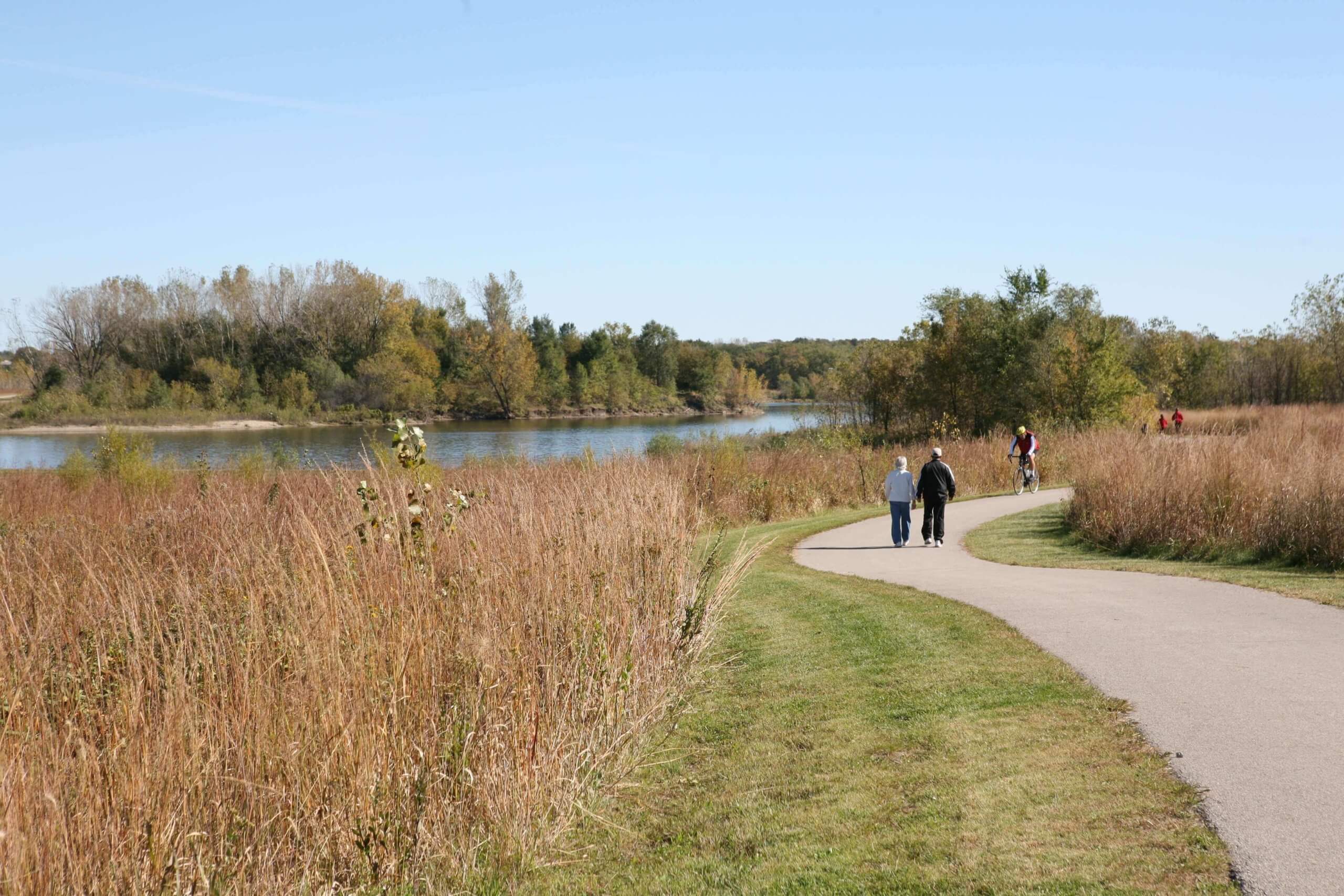
A couple enjoys their day walking along Fourmile’s path.
Another project Snyder & Associates worked on to address concerns and challenges facing the watershed is the Lower Fourmile Creek Greenway Master Plan. The development of stormwater management plans, such as Fourmile Creek, requires our staff to fully understand the municipality’s stormwater ordinances to insure that future stormwater controls will continue to meet baseline requirements.
With an emphasis on pre-emptive adjustments using modeling techniques and knowledge of historically impacted areas, the team at Snyder & Associates is experienced in the development and implementation of fiscally responsible stormwater management systems. Whether the drainage system concerns involve river flooding, urban flooding, or sewage backup, Snyder & Associates has the experience to recommend long-term solutions to improve your stormwater network. If a community drainage system is determined to be insufficient, our professionals can give recommendations to improve stormwater management and strengthen community resilience, providing targeted solutions to each specific area. These solutions may be as simple as introducing green infrastructure components, which help promote stormwater management and infiltration in urban environments.
Local Group Pushes for Uniformity across Community Boundaries
Capital Crossroads, a central Iowa group formed to provide positive opportunities for development, is looking to change this lack of uniformity by pushing for cohesive stormwater management standards across central Iowa. Along with city leaders and local partners, they’re hoping to promote “comprehensive, complementary, and linked approaches to ensure central Iowa’s natural resources are sustainable and protected.” Essentially, the goal is to create better alignment between jurisdictions in the region to speed up the pace and scale of implementation of practices that reduce negative stormwater impacts.
Working across Iowa and its neighboring states is nothing new for Snyder & Associates. Understanding the varying ordinances across states is part of the job, but having more uniformity within local metro areas would allow for more efficient planning and development processes. There are impactful stormwater management items this [Capital Crossroads] initiative is trying to resolve, explained Mark Land, P.E., CFM, Vice President of Snyder & Associates.
This work includes many things that will make a very positive difference in solving some of the drainage issues these cities have seen. With the Capital Crossroads stormwater recommendations (design standards, release rates, and modeling requirements) completed, local jurisdictions had an opportunity to adopt and incorporate all, or pieces, of the suggested new stormwater ordinance. Currently, the Central Iowa communities of Waukee, Windsor Heights, Urbandale, and Johnston have all moved forward in the recommended regulatory adoptions with Pleasant Hill, West Des Moines, Des Moines, and Bondurant actively working to finalize their regulation changes.
Nationwide Movement for Stormwater Management
Our state government and local leaders are not alone in attempting to spark these modifications. Communities all across the country are realizing the importance and need for change in stormwater management and ordinances. With the current efforts underway in the State of Iowa, we’re making great strides in protecting and improving our natural environment.