2727 SW Snyder Blvd, Ankeny, IA 50023

1 (888) 964-2020


Navigation

Back to Projects | Project Categories: Wastewater

Growth in Pleasant Hill Leads to Sanitary Sewer System Review

Rapid Community Expansion Stresses Existing Infrastructure

Community growth is a good thing, especially in suburban areas. However, successful and sustainable growth doesn’t happen on its own — it requires meticulous planning and strategic thinking. In 2010, the City of Pleasant Hill was in the midst of a rapid population expansion, experiencing a twelve percent increase in just nine years. If not adequately addressed, growth on this scale can put a strain on existing infrastructure, economic practices, and environmental processes.

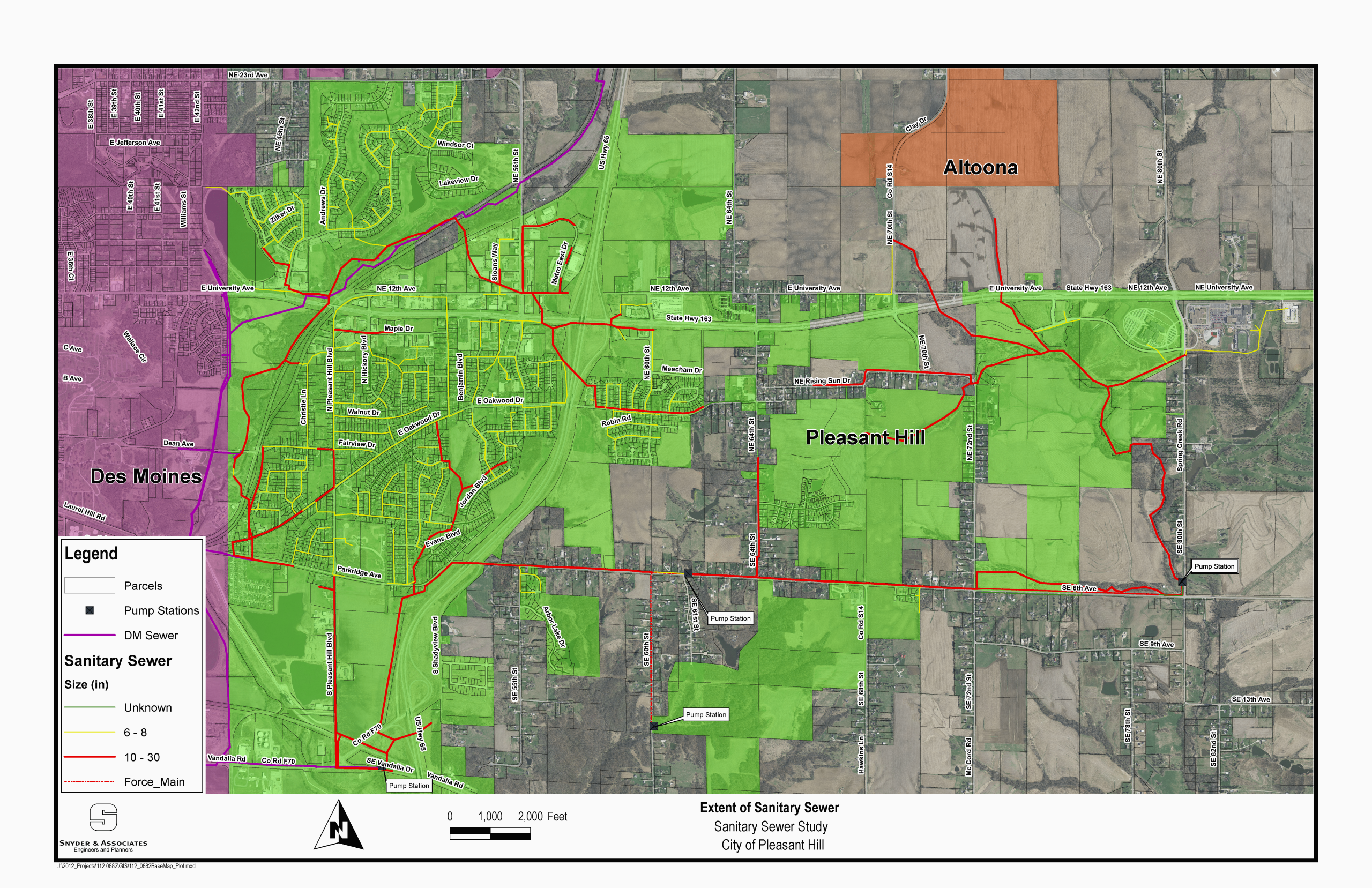
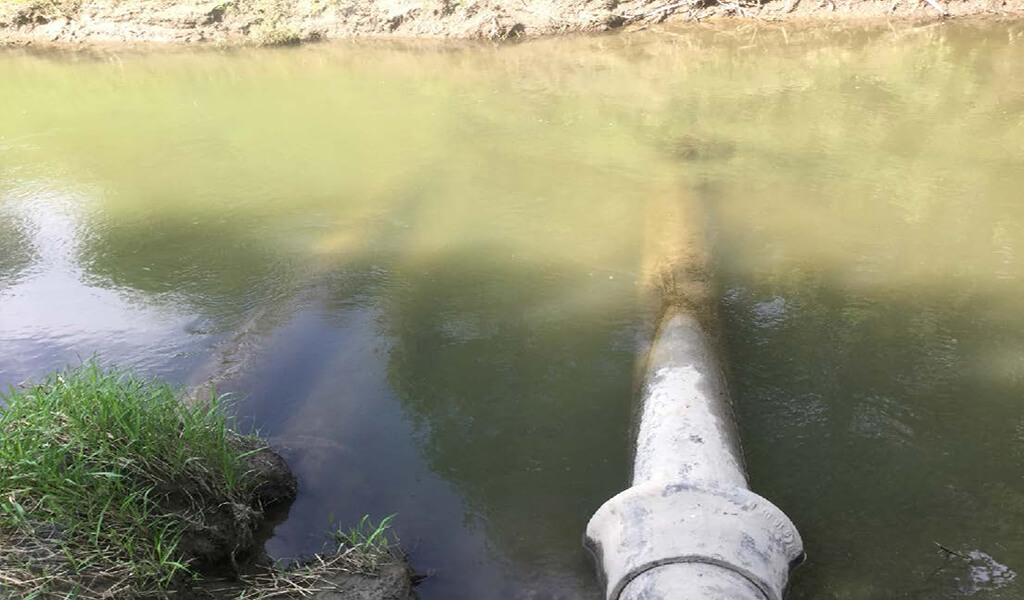
As the city engineers for Pleasant Hill, the municipality tasked Snyder & Associates with conducting a Sanitary Sewer System Review and engineering report. The city-wide examination aimed to identify long-term system and infrastructure upgrades required to support the community’s continued growth. After experiencing excessive stormwater flows and wastewater leeching into a nearby creek, the city requested the study also include a partial infiltration & inflow (I/I) assessment.

Creating a Viable & Adaptable Infrastructure Plan

In an effort to guarantee the usefulness of the information gathered by the sewer study even further, our team intentionally structured the plan to avoid forecasting future development. Instead, all improvements outlined in the plan were presented so they corresponded to acres of development instead of a specific timeline. Therefore, if development moves faster than expected (or gets put on hold) the infrastructure plan remains viable. This strategy ensures the community can expand at its own pace and maintain growth long into the future without fear of overtaxing their system.

Diverse Planning Tool Capable of Serving Multiple Communities

This planning document’s value was proven when Pleasant Hill’s neighboring community, Altoona, sought collaboration to address a portion of their sanitary sewer. Altoona’s service area covers a section that naturally drains towards Pleasant Hill. Serving this area with sanitary sewer would have required multiple pump stations to convey the flows back to Altoona’s wastewater facility. Through our planning efforts, an alternative means of service was identified in the form of a gravity sewer conveyance to Pleasant Hill’s wastewater collection system.

Utilizing the Sanitary Sewer System Review and the foundation it provided, our team analyzed and evaluated the impacts this alternative posed on the Pleasant Hill system and the capacity enhancements that would be necessary to accommodate Altoona’s wastewater dilemma. Our evaluation highlighted improvements the added load would require and aided in compensation negotiations between the two municipalities.

Targeting Specific Areas for Sanitary Sewer Improvements

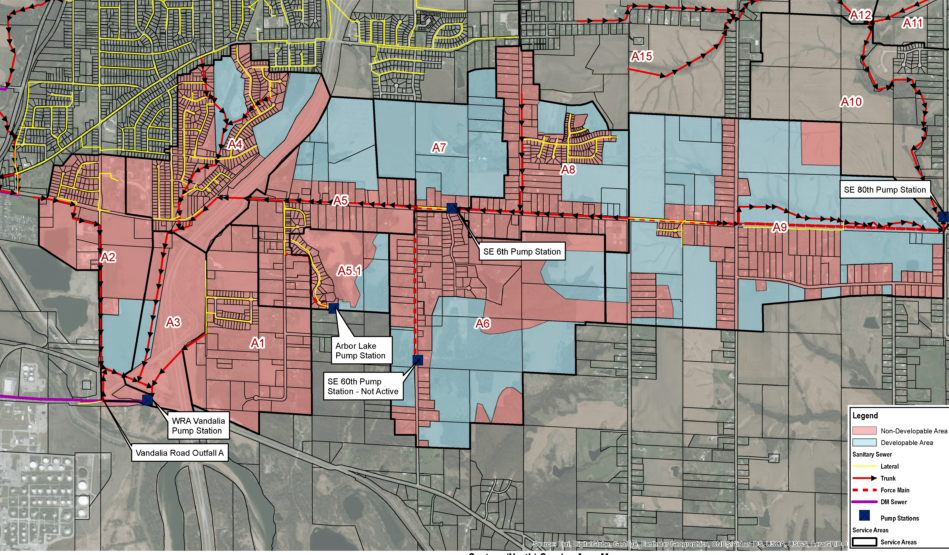
One of this project’s primary focus areas consisted of the East Side Sanitary Sewer Main Extension which serves a large portion of the Spring Creek watershed. In this area, the city saw the potential to serve up to an additional 16 square miles in the future, nearly three times the city’s current size.

While this expansion potential was impressive, it also brought the uncertainty of potentially overloading portions of the city’s wastewater collection system. The at-risk areas our team focused on included the Northeast 80th Street lift station, the Southeast 6th Avenue lift station, as well as several, aged sewer systems located downstream from sewer extensions and their expanded service areas. To find deficiencies that may hinder the current system from withstanding the anticipated increase in demand, our team used the city’s GIS database to calculate sewer capacities. They were then able to estimate sewer flows based on overall land use.

Numerous Improvement Options Provided to Meet Demand
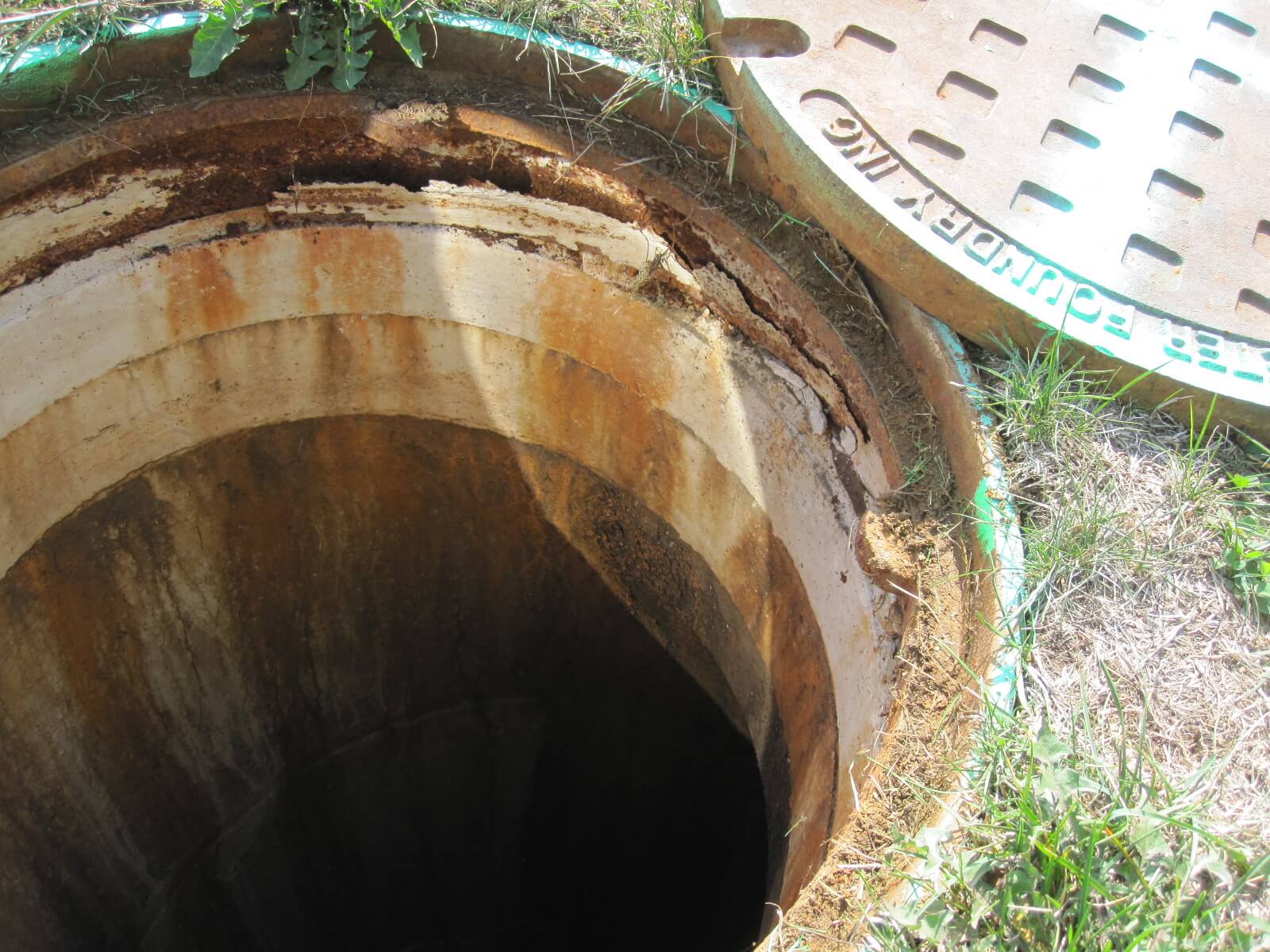
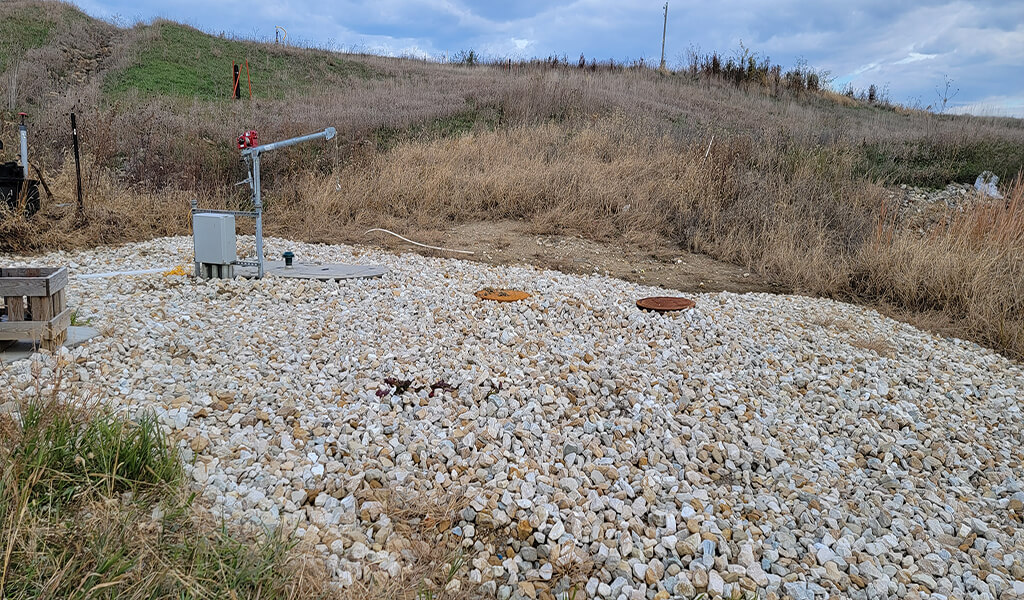
manhole with corroded seals found during sanitary sewer system review

Manholes such as this one with extensive corrosion cause leakage into sewer systems.

To avoid future infrastructure issues, our team put forward multiple modifications and upgrades for consideration. Some of these adjustments included:

  • Upgrading current 4″ force main pipes to 12″ and 16″ force mains at each lift station
  • Incorporating new wetwell/drywells and vertical screening system at each lift station
  • Reconstructing several critical sewer sections with larger pipes to increase capacity
  • Rehabilitating defective manholes and covers

Client

City of Pleasant Hill

Client Type

Project Type

Eric Cannon, P.E.

Eric Cannon, P.E.

Development Business Unit Leader

Related Projects

exposed siphon at omaha papio creek|drone map of the Papio Creek in Omaha NE|papio creek stream

Safeguarding Critical Infrastructure and Water Resources: Omaha’s “Papio” Creek

In March 2019, the City of Omaha faced a significant threat to its critical infrastructure under West Papillion Creek (known to locals as Papio Creek). A disastrous...
Leachate Disposal Lift Station at Des Moines County Landfill|excavator digging trench for sewer force main|Leachate Disposal Submersible Wet Well Lift Station|Leachate Disposal Construction of Force Main|Leachate Disposal Wastewater force main Cleanout

Leachate Disposal Solution for Des Moines County Landfill & the City of West Burlington

For many years, the Des Moines County Landfill relied on the traditional yet costly method of trucking excess water that percolated through the landfill, commonly known...
Slater wastewater treatment greenhouse at sunset|Wastewater lagoon with aeration bubbles|Greenhouse and settling pond|Aerial view of large lagoon cell drained for construction|Slater's new greenhouse for wastewater treatment|Inside Slater greenhouse with empty cells|Inside of slater wastewater treatment plant with algae belts.|Slater wastewater treatment plant ribbon cutting|visitors walk inside the new Slater greenhouse and view RAB belts|aerated lagoon at the slater wastewater treatment plant|RAB belts at the Slater wastewater treatment plant

Slater Incorporates Algae to Treat Community Wastewater

For years, the City of Slater used an aerated lagoon system as its primary wastewater treatment method. However, increased awareness of pollutants and their impact on...
square concrete new lift station|above ground section of vertical screen|large machine used to bore holes and make way for pipe|trenchless construction|lead tubing being placed before pipe|concrete tube that will eventually house pumps|square concrete new lift station

Lift Station Upgrades Eliminate Backups & Increase Efficiencies: Anamosa

Anamosa 2nd Street Wastewater Lift Station Improvements As community leaders in mature communities know, the need for new and more efficient wastewater systems is a...
large rectangle wastewater lagoon pond|snowy fields with school in distant background||large dirt hole during lagoon construction|concrete walls of the lagoons lift station placed in the ground

Starmont High School’s Wastewater Dilemma Requires Speedy Solution

Thanks to positive client relationships and word-of-mouth recommendations, Snyder & Associates was hired to find a viable wastewater solution for a high...
aerial view of two large blue lagoons and operation buildings||waterside view of lagoon and gravel shores|metal walkway between two lagoons. One is rough and one is smooth.||

West Burlington’s Wastewater Treatment Plant Upgraded to Meet Current NPDES Requirements

Snyder & Associates wastewater engineers were enlisted to develop a plan for remodeling and expanding West Burlington’s existing wastewater treatment...
car sprays water while driving through a large puddle||car sprays water while driving through a large puddle|view of downtown skyscrapers at then end of a main street|satellite map with project area outlined in red|construction work in a deep trench

Des Moines’ Sewer Separation Initiative Prevents Flooding, Backups & Overflows

Antiquated Stormwater & Wastewater System Fails to Meet New Standards When the City of Des Moines wastewater system was initially constructed, viable methods for...
Inside of the Disinfection-Flow Equalization Tank.|Inside of the SBR tank looking at the aeration piping system.|Inside of treatment tank looking at piping

Custom Wastewater Treatment Solutions for Growing Industrial Client

Working with this industrial client for over ten years, Snyder & Associates continues to provide the most cost-effective, environmentally-sound, and...
cement building with blue roof|grey wall of electrical pannels|multiple pumps in cement room|three oval motors in a row|looking down on multi-level facility floors|

New Pump Station Expands St. Joseph’s Eastside Sewer System Reach

The City of St. Joseph selected Snyder & Associates to replace the outdated, undersized Easton Road pump station with a newly designed wastewater facility in an...
||||||new bluff creek lift station building

Wastewater System Analysis & Planning: Cedar Falls, Iowa

Community Growth Prompts New Wastewater System Needs Steady population growth and an expanding commercial base led to sewer system capacity issues in Cedar Falls, Iowa....

more than 45 years

Serving Clients Around the Country

DB+