Slater Incorporates Algae to Treat Community Wastewater
2025 Engineering Excellence Grand Prize Award in Water & Wastewater Category, awarded by the American Council of Engineering Companies (ACEC) of Iowa I 2025 Grand Conceptor Award, awarded by the American Council of Engineering Companies (ACEC) of Iowa
For years, the City of Slater used an aerated lagoon system as its primary
wastewater treatment method. However, increased awareness of pollutants and their impact on our environment and human health has resulted in the implementation of considerably stricter EPA regulations. This was accomplished by expanding the scope of
regulated contaminants and lowering the maximum contaminant level set for wastewater discharge. Due to these changes, Slater's lagoon system failed to maintain compliance regularly and was no longer viable as the sole treatment method.
The communities' main concern was the unpredictable ammonia content, which would see spikes during warm spring days. As long-standing clients, city leaders contacted the wastewater experts at Snyder & Associates to update their wastewater treatment facility and help mitigate the pollutant issues.
Emerging "Green" Technology for Wastewater Treatment
Our team commonly deals with Ammonia in wastewater and can create customized treatment options to obtain compliance. Knowing that the city's goal was to lower Ammonia and nitrate levels, we recommended a
Sequencing Batch Reactor (SBR) mechanical treatment plant. This system would solve their regulatory issues without expanding the current footprint of the lagoon facility. The SBR is also easily expandable to accommodate anticipated community growth.
The idea was broached during planning discussions for a relatively uncommon, reduced-energy treatment technology. The city was impressed by the potential cost-savings of this new technology. It was willing to take a small risk to implement the greener, less energy-intensive treatment system.
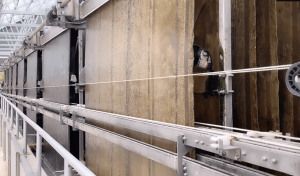
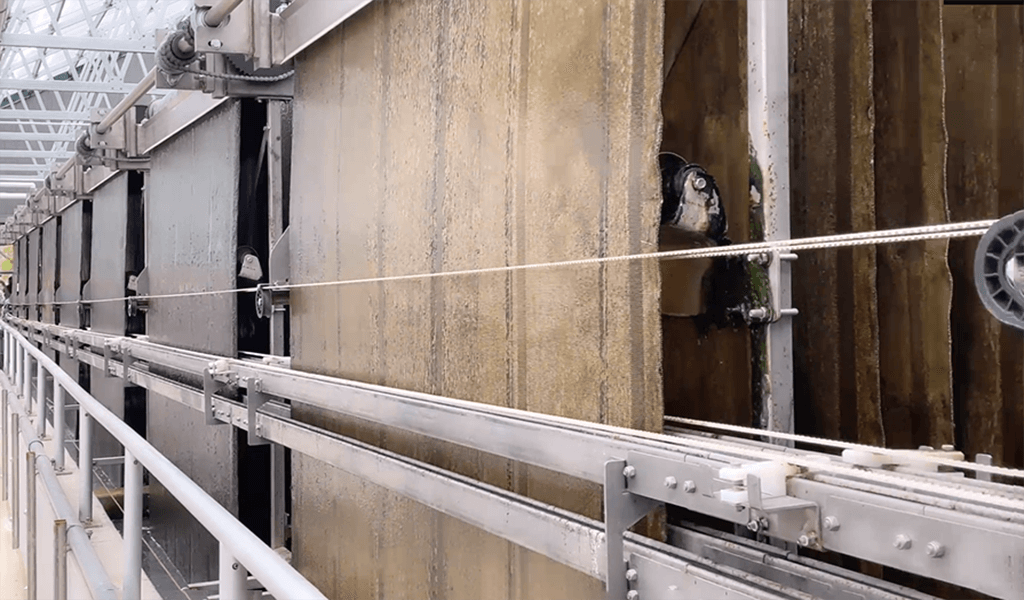
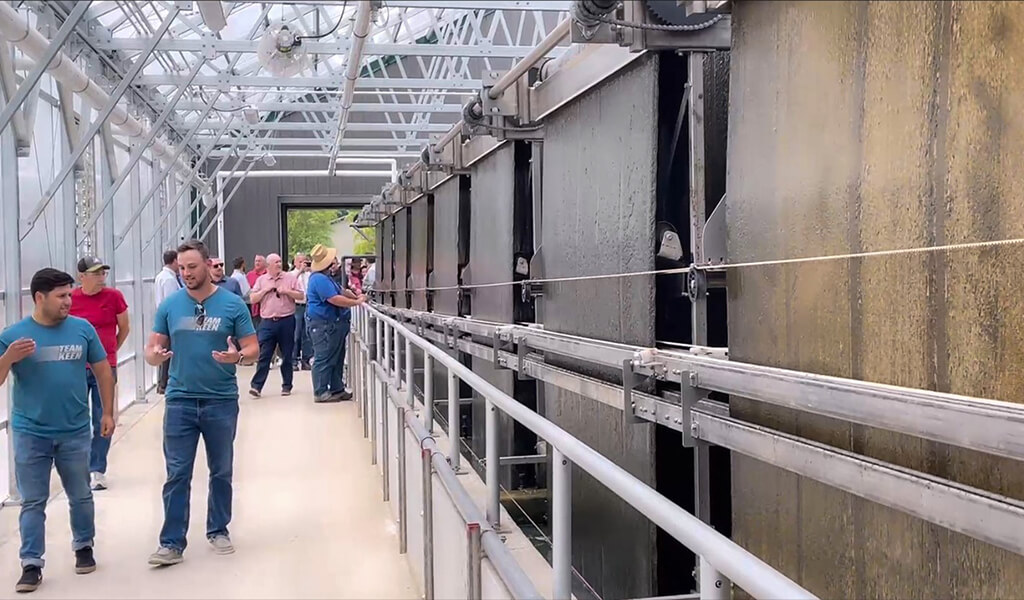
The system uses vertical conveyor belts that grow algae on their surface. As the algae grow, it consumes nitrogen and phosphorus from the wastewater.
This new system is based on
Gross-Wen Technologies' (GWT) patented wastewater treatment technology, a Revolving Algal Biofilm (RAB™) system. This technology, developed at Iowa State University, works in conjunction with lagoon systems when additional biochemical oxygen demand (BOD), Ammonia (NH3), total nitrogen (TN), and/or total phosphorus (TP) removals are needed. The RAB™ can be used with the city's existing lagoon treatment system to provide supplemental treatment and reduce the loadings on the lagoon system. This method will lower energy requirements by allowing the city to turn off blowers and substantially minimize electrical usage. To better assist our clients, our experts quickly ramped up their knowledge of the RAB™ system to ensure this new technology fits the City of Slater's needs.
Ultimately, this system promotes algae growth, which consumes and removes nitrogen and phosphorus nutrients. To achieve this, large grit particles are removed as wastewater enters the treatment facility, and the wastewater flows sequentially through multiple RAB™ cells. After being treated by the algae in the greenhouse, the water progresses through two aerated and one quiescent lagoon. The final step in the process is
UV disinfection before being discharged into local waterways.
While this system requires more overall space for the complete treatment process, the benefits are eco-friendlier and reduce energy. Additionally, the algae produced by the system is harvested as a consumable material and can be used as inputs for value-added products, including fertilizer and animal feed.
Unique Design Meets Space Restrictions & Wastewater Treatment Needs
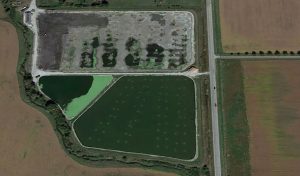
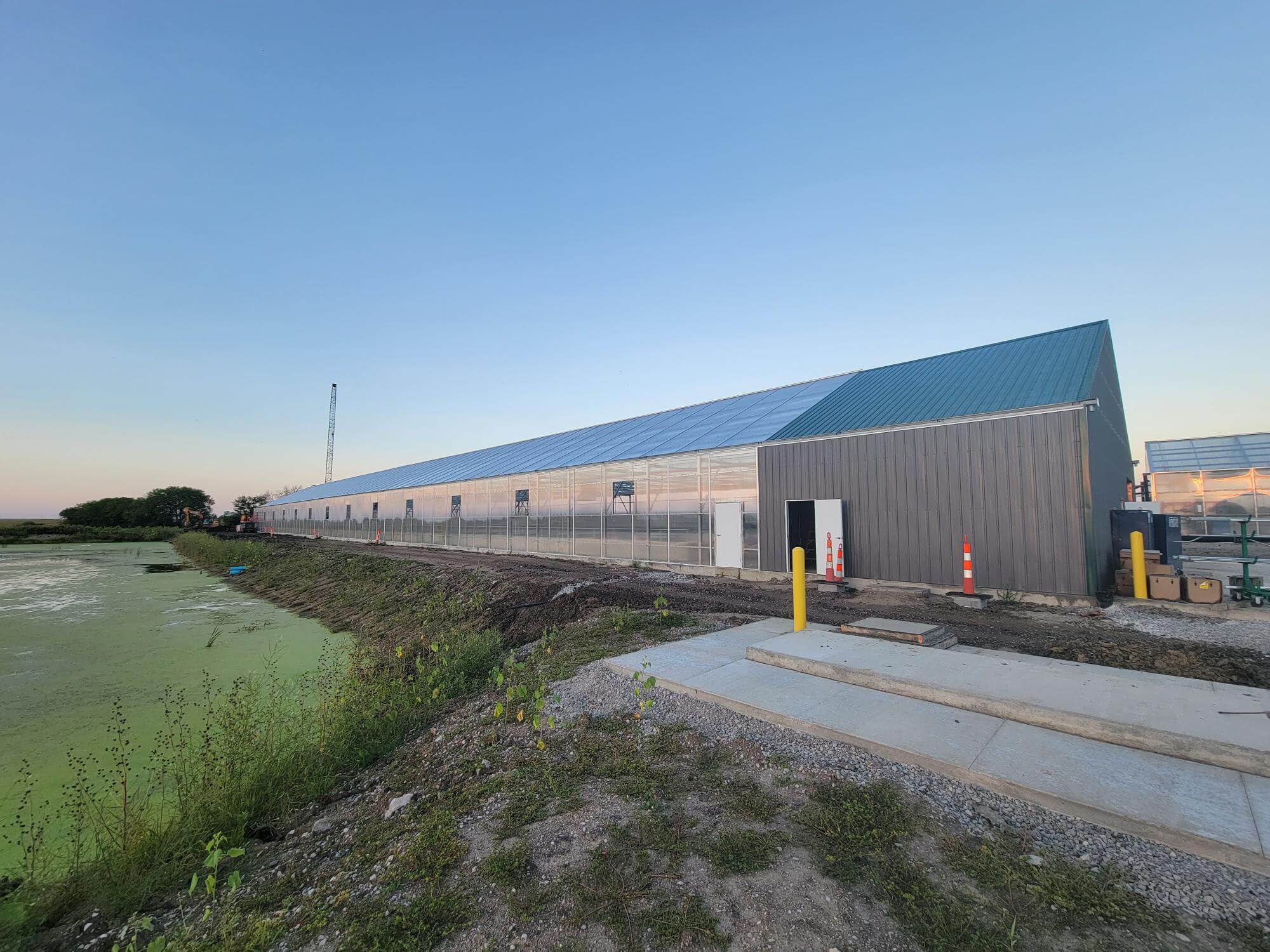
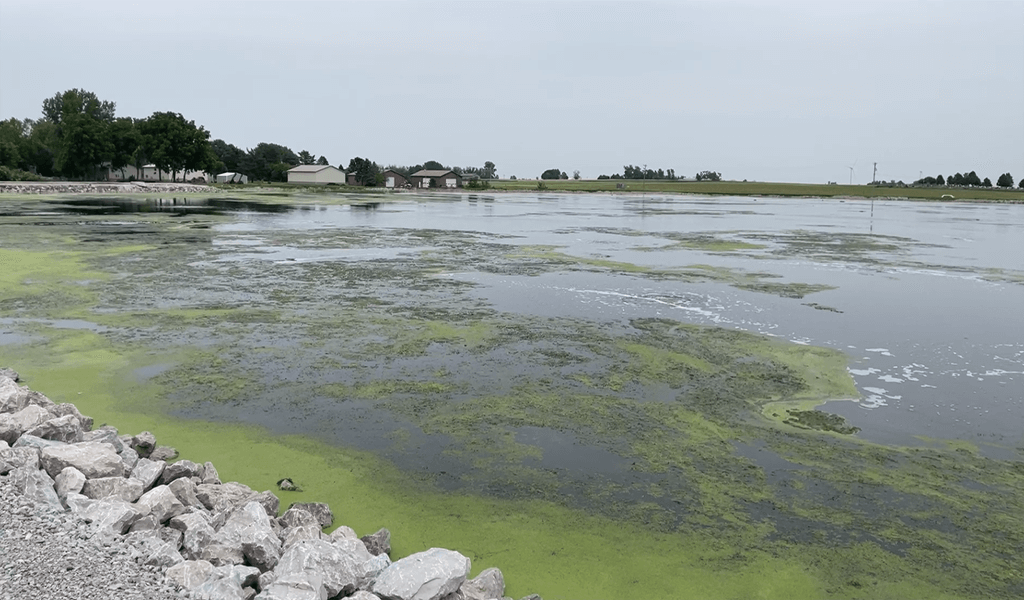
The large lagoon cell was drained to allow space for the greenhouse in the current facility footprint.
Since the footprint of the current treatment facility had space limitations, our team had to get creative to provide enough room for the nearly 350' X 50' greenhouse containing three concrete cells and 30 RAB™ belts. One of the large existing lagoons was drained to accomplish this, and almost one-fourth of the area was filled with soil. This arrangement allowed enough lagoon area for adequate treatment while also providing a location that would work for the greenhouse and RAB™ equipment.
Challenges also arose during the design phase with the necessary grit removal processes. For the RAB™ equipment to work correctly, all grit must be removed before entering the treatment system to ensure longer lifespans of the rotating equipment. Our initial plan was to provide a preliminary treatment process via a mechanical screen and mechanically induced vortex grit removal equipment. However, that required a higher cost than the city found acceptable. With that in mind, our team adjusted the plans by creating a new 200' X 50' settling basin that would be located adjacent to the new greenhouse.
Greener Future for the Wastewater Treatment Market
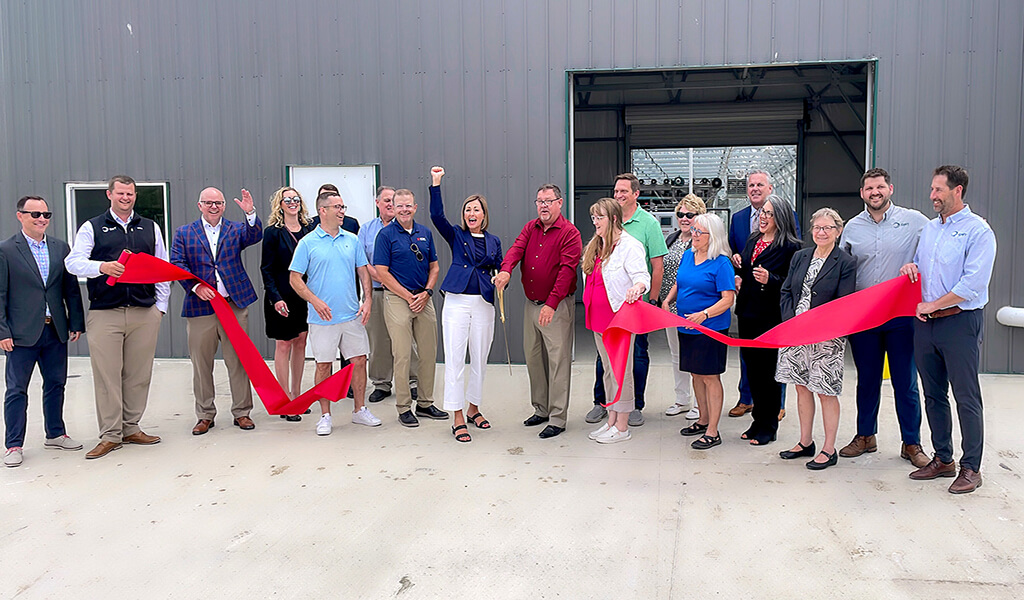
Construction on the upgraded facility began in the spring of 2021 and wrapped up in early 2023. With the completion of the system, the City of Slater has become the pioneer in the State of Iowa to employ this revolutionary technology. During the treatment facility's grand opening on June 9, 2023, Governor Kim Reynolds remarked on how excited she was by this new process and technology applicable to many other small rural communities. Our wastewater experts were proud to collaborate with forward-thinking community leaders and local companies to create a greener, more productive future for the wastewater industry.