2023 Build South Dakota Awards, Category II AGC Award
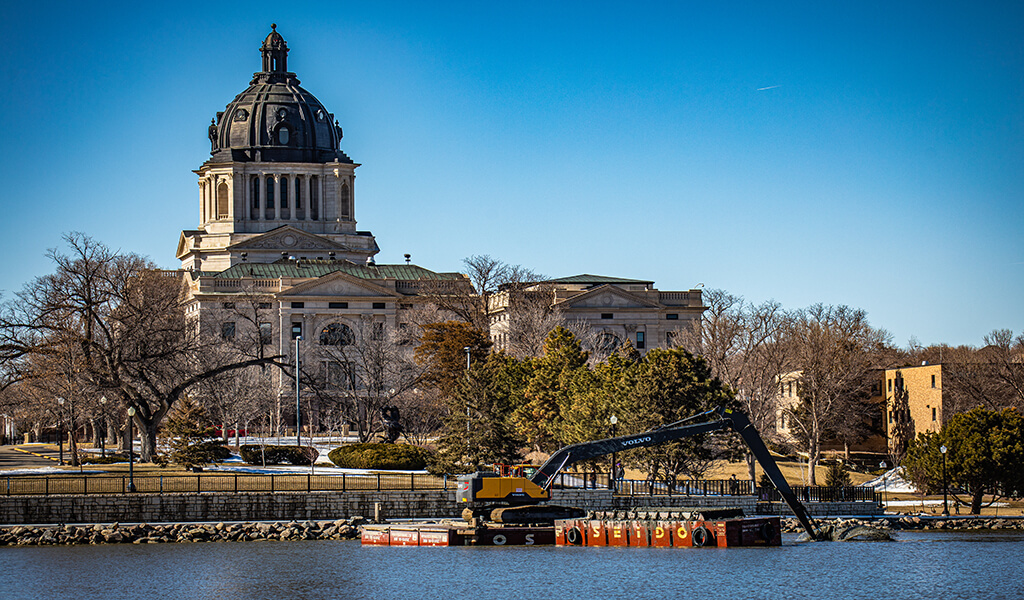
One of the prominent features complementing the architectural beauty of the Capitol Complex in Pierre, South Dakota, is the 9.5-acre Capitol Lake. Fed by a naturally occurring artesian well, this expansive lake was built in 1913 on the southeast side of the Capitol building. It is surrounded by tranquil park space and walking trails adorned with historic monuments celebrating South Dakota’s heritage and culture, making the area a prime attraction for community members and visitors.
However, as the Pierre community grew, additional stormwater was routed through the lake due to its location near the bottom of a tributary discharging into the Missouri River. Thousands of Canadian Geese and other waterfowl also inhabited the year-round open water. These issues have created poor water quality and reduced the lake’s original average depth of 16 to 20 feet to less than 6 feet.
The South Dakota Department of Agriculture & Natural Resources, acting through the Office of the State Engineer, selected the Snyder & Associates and Morris, Inc. design-build team to dredge the lake and restore it to its original depth.
Controlling Sediment Flow & Protecting Wildlife During Dredging Operations
Before dredging began, preliminary testing indicated that lake sediment included high levels of phosphorous, ammonia, and total suspended solids (TSS). Due to their soluble nature and potential to harm wildlife, containment measures were needed to prevent sediment entry into Capitol Creek — the lake’s natural path for overflows. This was achieved by drawing down the lake elevation using silt curtains, screens, and siphons.
By lowering the water level, our team ensured the disturbed sediment would remain in the basin and not flow over the weir during dredging operations. This process allowed the amphibious and barge excavators to maneuver and dredge safely without uncontrolled discharge.
Dredging is also a disruptive process for wildlife. While migratory birds tend to avoid the site during construction, aquatic creatures do not have that luxury. The South Dakota Game, Fish, and Parks team performed a humane fish removal operation called electroshocking before active dredging operations began. Electroshocking fish is a common and effective method used in fishery management. This process directs a small electrical current through the water, stunning the fish so they can be quickly scooped up and removed. Electroshocking is a humane method to remove fish from a waterway and has little to no impact on the long-term health of the fish population. Once captured, the fish were relocated to several local waterways.
Dredging Process Options & Recycling Dredged Material
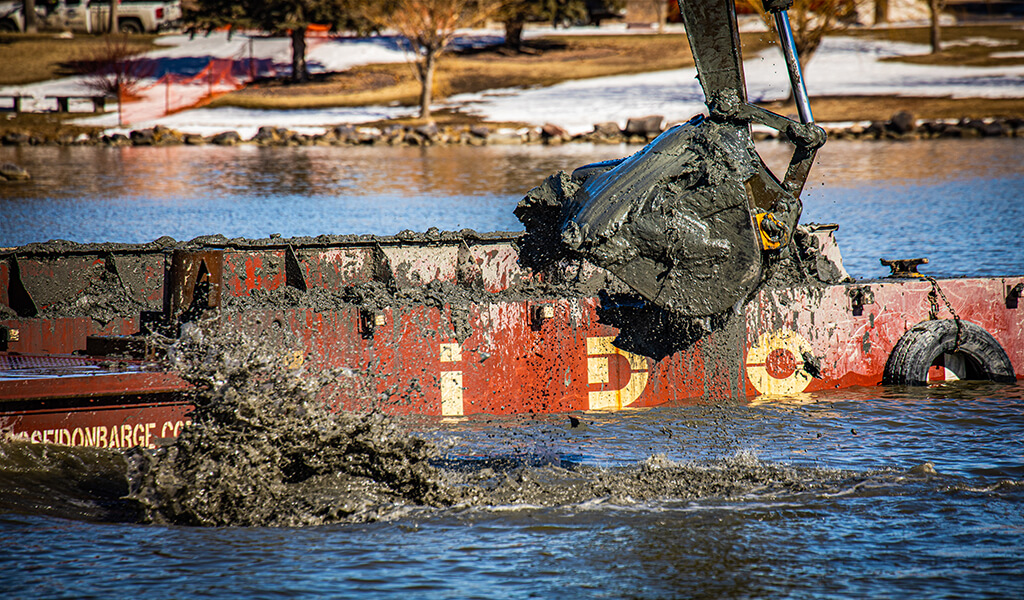
Dredging is generally performed using a mechanical method, such as an excavator with a bucket to dig up sediment, or a hydraulic method using a cutting head and suction pump to remove materials. Through numerous discussions, it was determined that hydraulic dredging should be ruled out due to the planned winter operations and sediment size and types, which prevent effective settling. A mechanical method using excavators, barges, and dump trucks was selected.
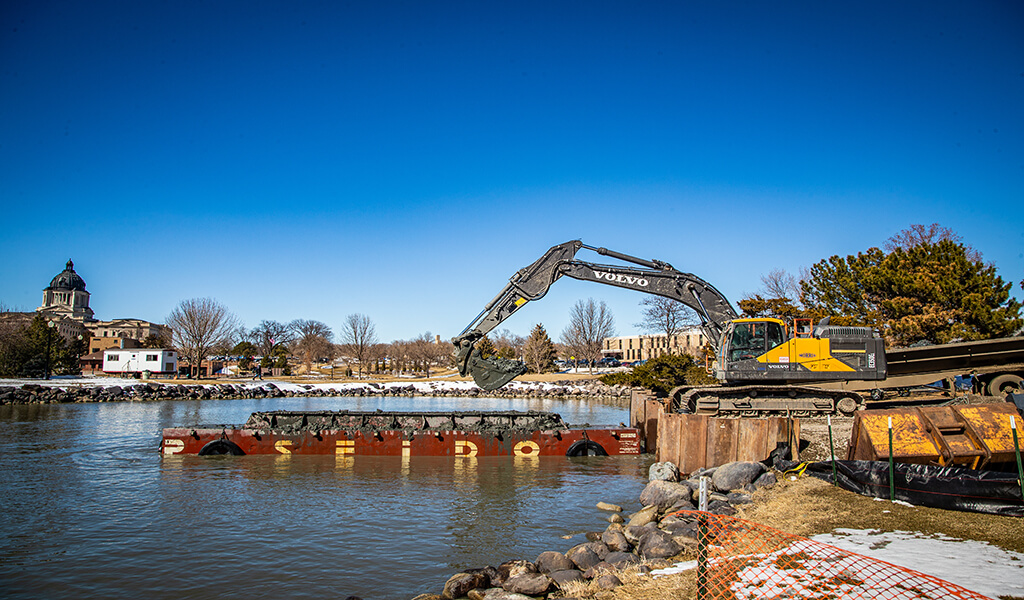
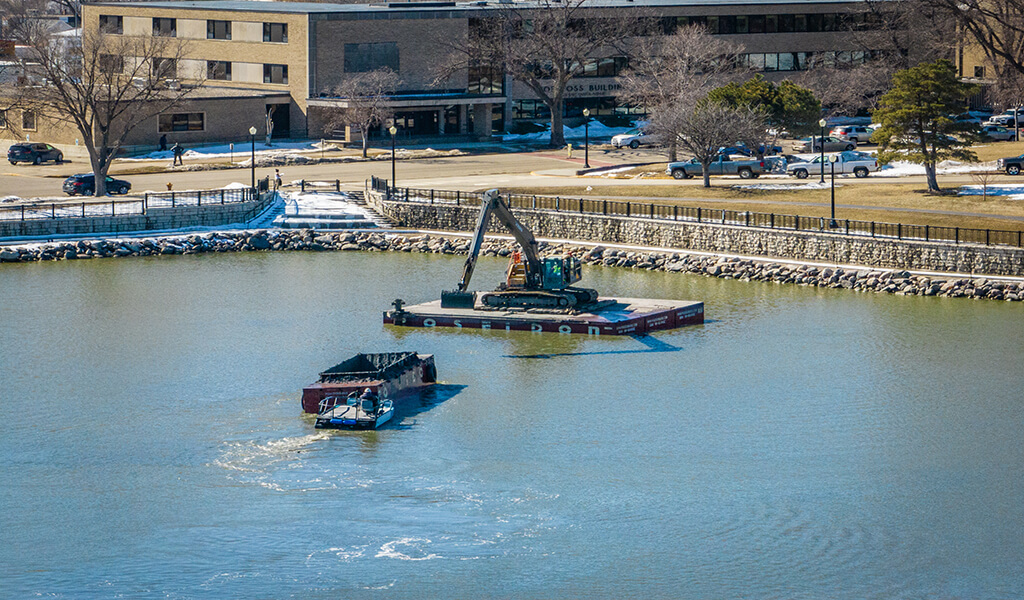
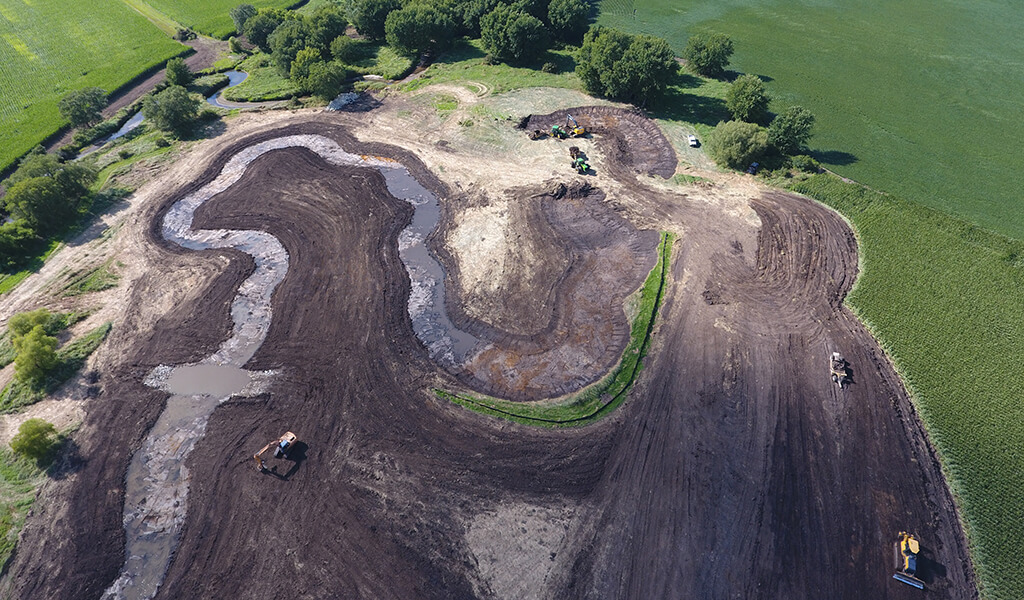
Initially, an amphibious excavator was selected for sediment removal. This machine can perform dredging operations while supported on soft terrains such as swamps, wetlands, and shallow water. However, it quickly became apparent that as the excavator moved deeper into the lake, it was no longer performing satisfactorily and needed to be replaced. A barge was located rapidly, and a long-reach excavator was positioned on the floating structure to continue the process.
Once removed, the lakebed material was loaded into a hopper barge and transferred to dump trucks stationed in a specially designed loading area that had been set up with erosion controls. The sediment was taken to a locally permitted landfill, where it was contained for dewatering.
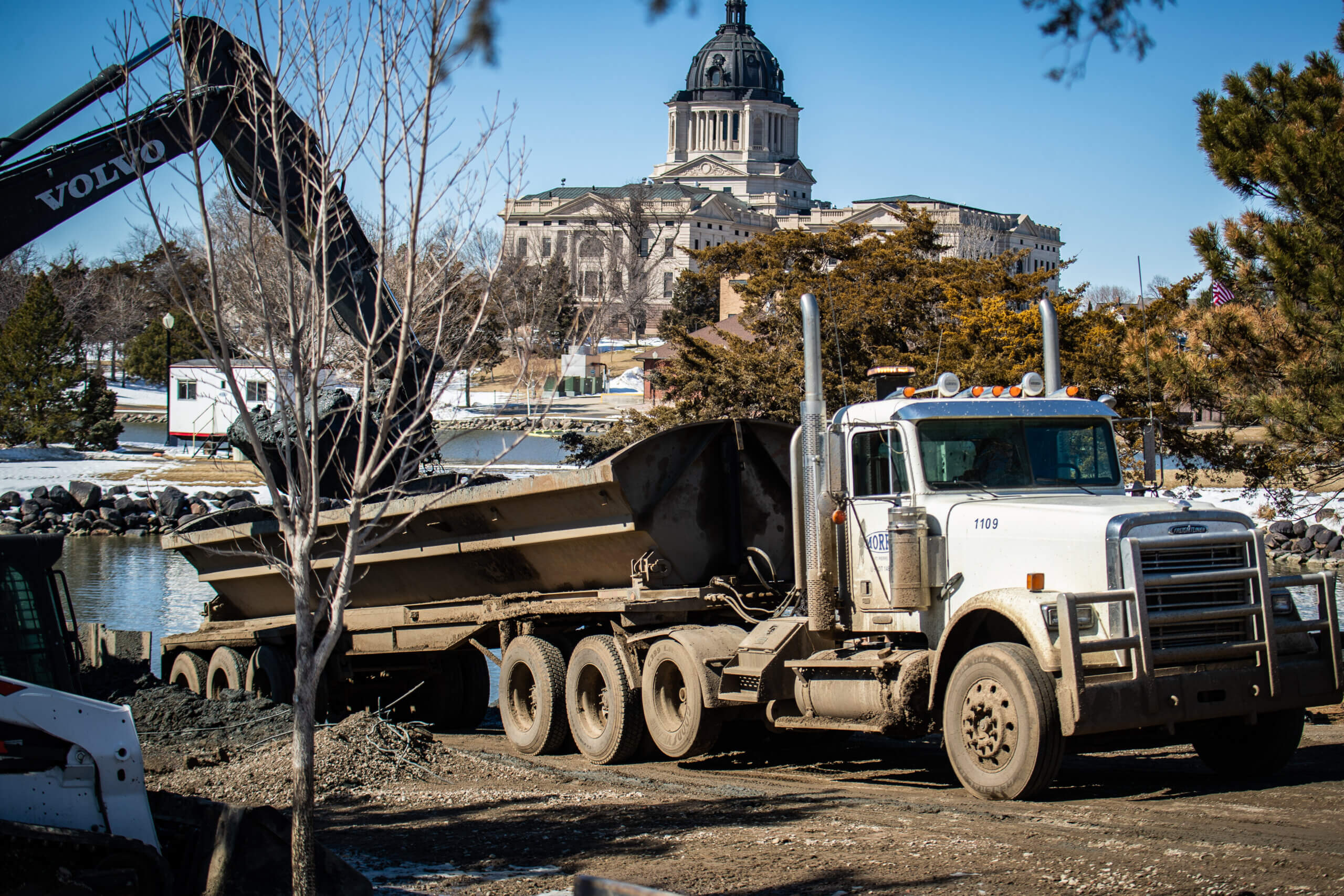
Several erosion control measures were implemented for the dump truck loading area.
Since the sediment contains high concentrations of phosphorous and organics, it is incredibly nutrient-rich and will be recycled as topsoil for future projects around the state.
Avoiding Abandoned Infrastructure
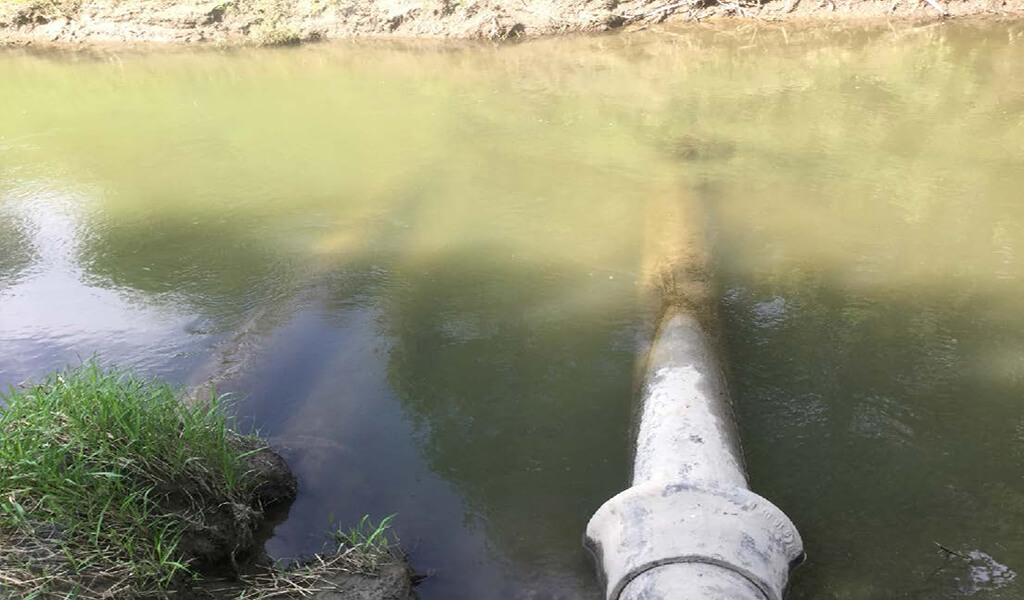
During dredging operations, a previously unknown utility map from 1942 indicated adjacent gas and sewer lines possibly located below the lake bed. The project team superimposed the old map onto modern survey data maps, performed field investigation work, and determined minimal damage risk.
However, all parties agreed that the sewer should be properly abandoned. To do this, the pipe was sealed by placing two inflatable plugs in the line and filling the utility access and pipe with a high-slump, small-aggregate concrete. This process makes the aged pipe a solid structure, removing the possibility of leakage or infiltration.
Aggressive Project Schedule Avoids Busy Season
With Capitol Lake serving as a community attraction, project leaders wanted the work done before the high-access seasons of spring, summer, and fall. Since this aggressive schedule was necessary, a well-defined process was vital for success.
Along with precise planning, our project team and the Morris team expedited the project by performing multiple aspects at concurring times. As we conducted the survey and determined project specs, the crew at Morris would locate and mobilize the equipment and machinery needed to fulfill the plans. This saved significant time as some barges and excavators were out of state, requiring additional transport time. With equipment ready to start as soon as plans were finalized, we completed the dredging project in less than six months.
Collaboration Leads to Success
The key to this project’s success can be attributed to the high quality and depth of experience of the Design-Build team members and how well they complemented each other’s work. These factors, coupled with a proactive and supportive presence from the state, allowed our experts to complete the dredging of Capitol Lake as efficiently as possible. More than 32,000 cubic yards of sediment were removed from the lake.
After the project was completed and warmer weather arrived, wildlife quickly returned to the lake, with several new species of waterfowl inhabiting the area. More importantly, the lake is ready to once again provide the community with enjoyment and relaxation in a healthy and safe environment.
The Capitol Lake Dredging Project earned its prestigious status as the Category II AGC Build South Dakota Award Winner through meticulous planning, innovative execution, and a significant positive impact on the local community. The project stood out among its peers by demonstrating excellence in construction practices, adherence to safety standards, and efficient resource management. This recognition underscores the project’s commitment to excellence and significant contribution to advancing construction practices in South Dakota.